Your Adjuster Visits Once. The Person Who Approves the Money Never Leaves the Desk
Staff adjuster, independent adjuster, public adjuster: who pays each one, what separates a thorough scope from a thin one, and the desk examiner most homeowners never speak to.
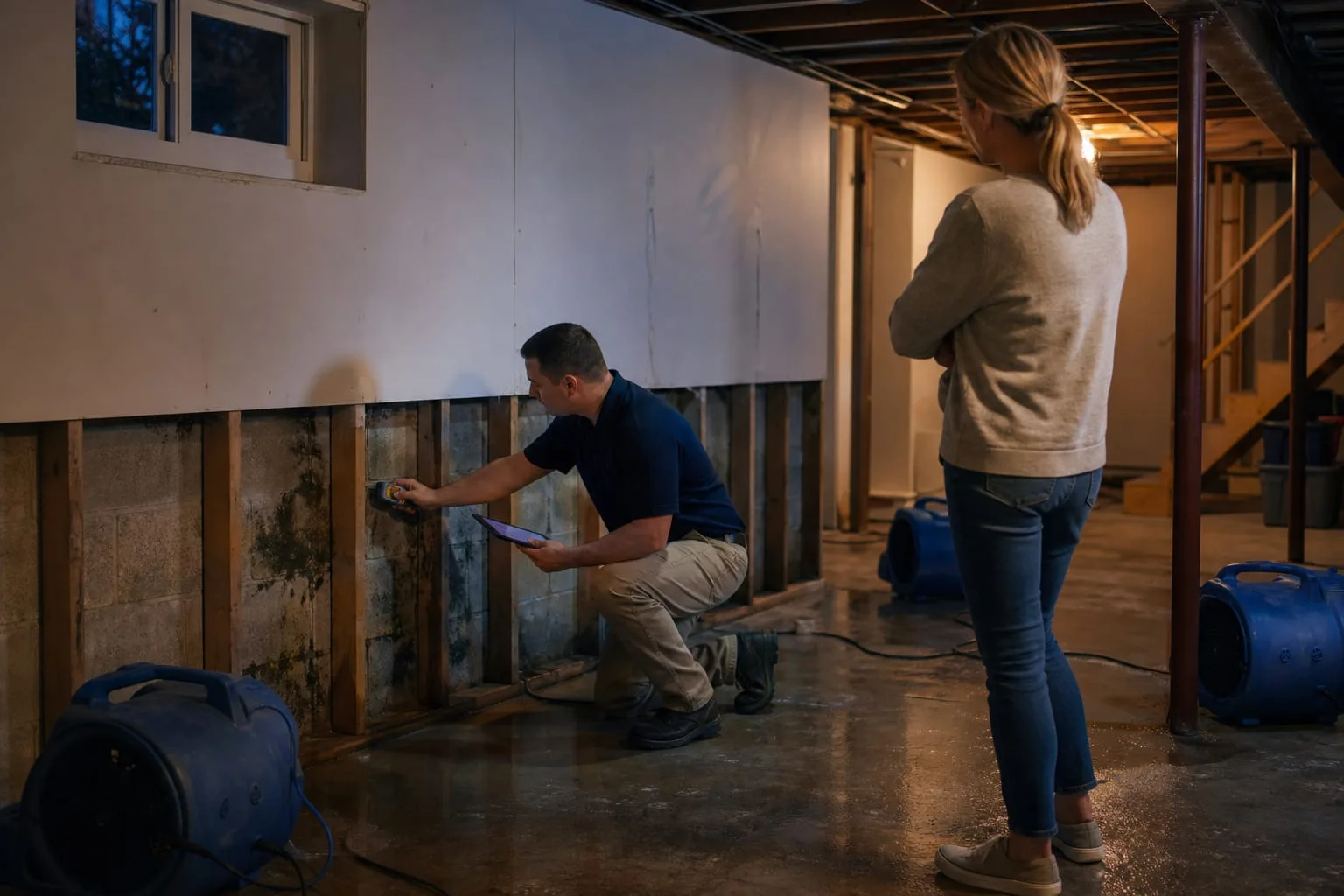
The person who walks through your flooded basement with a moisture meter and a tablet is, in most claims, the only representative of the insurance company you will ever meet in person. That fact does a lot of quiet damage to how homeowners handle the rest of the file. People perform for the visit, answer the questions asked, and then wait, on the assumption that the visitor is the decision. He usually is not. Understanding who he works for, what he is authorized to approve, and who reads his report afterward changes the questions worth asking on the day.
Three arrangements, and who signs the check the adjuster cashes
Adjusting became a distinct trade in the United States because big urban fires produced more claims at once than any carrier's own clerks could inspect. That pressure created two of the three arrangements you will encounter. A staff adjuster is a salaried employee of your insurer, carries a company email address, and handles files continuously through the year. An independent adjuster is a contractor, often deployed by an adjusting firm the carrier retains, and is common after hurricanes, hail events and freezes when volume spikes. Both are paid, directly or indirectly, by the company that will pay your claim.
The third arrangement is different in kind. A public adjuster is licensed by your state and hired by you, typically on a percentage of the eventual settlement, to prepare and argue the claim on your behalf. States have regulated the role since the early twentieth century precisely because the fee structure invites abuse, and most impose contract, disclosure and cancellation rules. The practical distinction is not honesty. Staff and independent adjusters are frequently careful and fair. The distinction is whose loss the person is paid to document completely.
The name on the file nobody thinks to ask for
Behind the field adjuster sits a desk examiner, sometimes called a claims examiner or file handler, who holds the settlement authority the field visitor does not. This is the party almost every homeowner overlooks. The examiner never sees your house. She sees photographs, a moisture log, a written scope, an estimate exported from estimating software, and a coverage summary, and she decides what the carrier pays against that record. Independent adjusters in particular often have low or no authority, meaning their job ends at documentation and recommendation. The recommendation travels. Your explanation on the driveway does not.
So ask, on the first visit: who reviews this file after you, what is your authority limit, and how do I reach the examiner directly. A good answer is specific. It names a role, gives a claim number and a phone extension, and explains that anything above a stated dollar figure goes upstairs for approval. A poor answer is a reassurance. If you hear that you should not worry about the back office and that everything goes through him, you have learned that the person in front of you either does not know how his own file moves or would rather you did not.
What separates a thorough scope from a thin one
The document that decides your claim is the scope of loss: the room by room list of what was damaged and what work restores it. A barely adequate scope names the obvious. Drywall two feet up, carpet and pad in three rooms, drying equipment for four days. A good scope names the consequences. It carries the removal of baseboard and shoe molding, the detach and reset of toilets and vanities, the sealing and repainting of full wall surfaces rather than patched bands, the flooring transitions that no longer align, the contents manipulation charge for moving furniture, and the cleanup and disposal that any real crew will bill for.
You can test a scope in ten minutes without knowing construction pricing. Walk it against the house and look for the items a homeowner notices only after the check clears. Does it address the cabinet toe kicks. Does it account for matching, meaning the paint or flooring that continues into an undamaged room. Does it separate mitigation from repair so the drying invoice is not quietly consuming the repair budget. If a line item is missing, it is not being negotiated later. It is simply absent from the number the examiner approves.
Bringing in your own adjuster, and what the fee buys
A public adjuster earns the percentage on complicated losses: a fire with smoke through the structure, a long undetected leak with framing involvement, a flood claim under the National Flood Insurance Program, which the Federal Emergency Management Agency oversees and which carries its own proof of loss deadlines and documentation standards. On a straightforward claim with a cooperative staff adjuster and a competent restoration contractor writing the estimate, the fee often buys work you were already getting. The honest version of this trade is timing. The value of a public adjuster is highest before the scope is written and lowest after a settlement is already on the table.
Interview two of them before signing. Ask what percentage they charge and whether it applies to the entire settlement or only to amounts recovered above the carrier's current offer, ask for their state license number, ask who actually inspects and writes the estimate, and ask for two references from claims that closed in the last year. A poor answer promises a multiple of the current offer. Nobody can know that before reading the policy and the scope, and a number offered that early is a sales figure rather than an assessment.
When the disagreement needs a mechanism instead of another call
Most homeowners policies contain an appraisal provision, a clause that predates modern claims departments and exists to settle disputes about amount rather than coverage. Each side names an appraiser, the two appraisers select an umpire, and an agreement between any two of them binds the loss. It is not free, and it does not help if the fight is about whether the peril is covered at all. It is, however, the reason a stalled dispute over the value of a roof or a kitchen does not have to become litigation, and knowing the clause is there changes the tone of the conversation before it is invoked.
Keep the file the way the examiner will read it. Dated photographs, the moisture readings, the written scope with your additions noted, the contractor's estimate, receipts for anything you spent to prevent further damage, and a short log of every call with the name and extension of whoever answered. The homeowner who can produce that in one attachment is arguing from the same record the decision is made on, which is the whole advantage.