Your Adjuster Does Not Approve the Check. Five Questions for the Person Who Does
The person walking your house with a moisture meter is rarely the one who releases money, and five questions decide what the claim costs you.
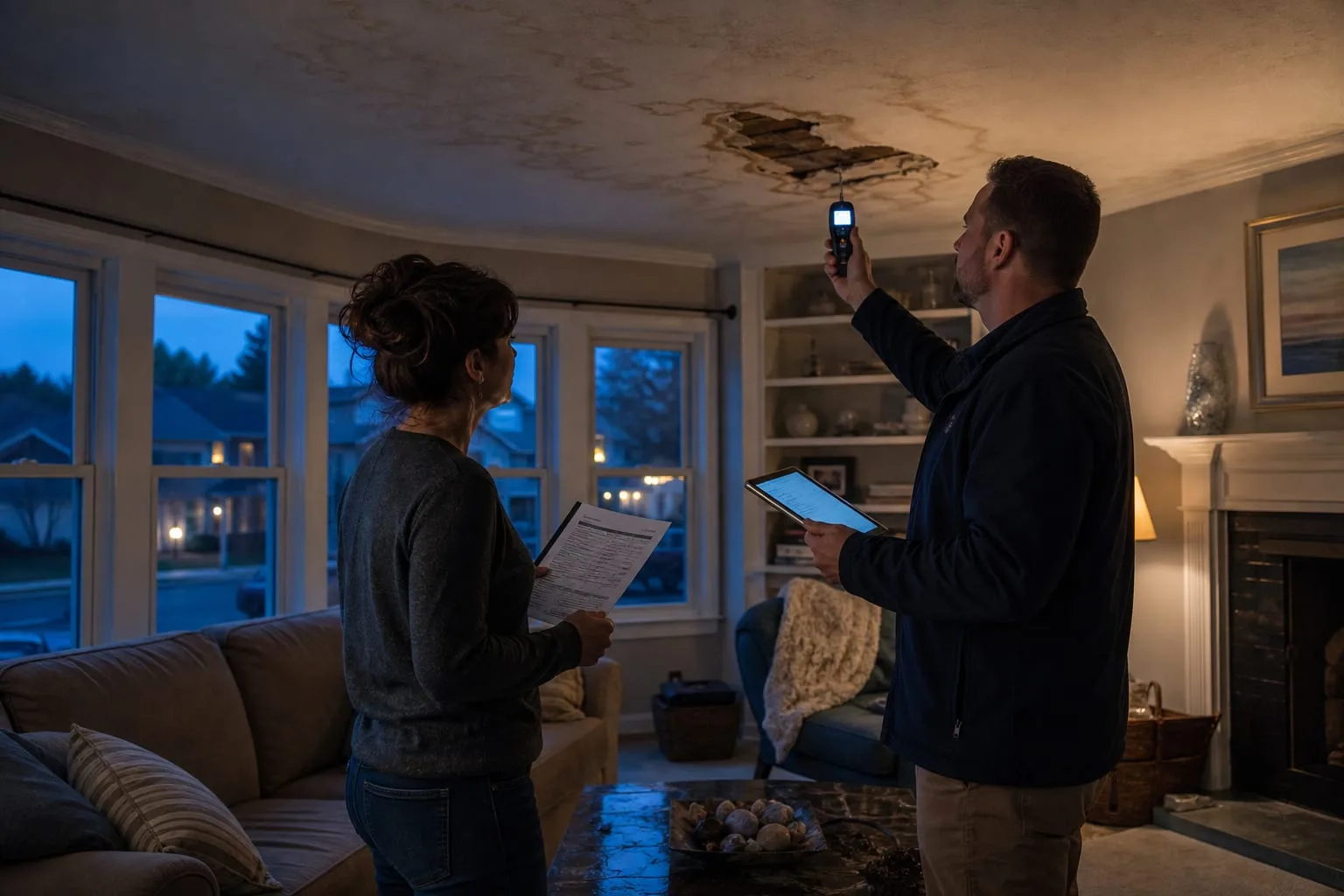
The person walking your hallway with a moisture meter and a tablet is, in most claims, not the person who releases the money. That gap between the field and the desk is where homeowners lose weeks, and it is the single most useful thing to understand before you start answering questions about how the water got in. The visit feels like the decision. It is closer to an evidence-gathering exercise, written up by one party and reviewed by another, and priced against a list neither of you wrote. Knowing who does what changes the questions worth asking.
Who is standing in your house, and who employs them
There are three people who can carry the title adjuster on your loss, and they answer to different parties. A staff adjuster is a salaried employee of your insurer. An independent adjuster is a contractor, often working through a firm the carrier retains in surge conditions, paid per file or per hour by that carrier. A public adjuster is licensed by your state and works for you, for a fee. Ask directly, at the door: who pays you for this file, and are you a carrier employee or an outside vendor? A good answer is one sentence and unhesitating. A poor answer is a business card and a change of subject.
The distinction matters for cost because independent field adjusters are frequently working a high volume of files after a storm, with limited authority and a queue behind them. That is not a character flaw. It is a workload problem, and it is solved by making your file easy to approve rather than by pressing the person in front of you for a number they cannot give.
The examiner at the desk is the party most people overlook
Behind the field adjuster sits a claim examiner, sometimes called a desk adjuster or file handler, who reads the report, applies the policy language, sets reserves, and authorizes payment. Most homeowners never learn this person's name. They should. The examiner is the party in the transaction with actual settlement authority, and every document you produce is really addressed to them, not to the person who took photographs of your ceiling.
So ask for the examiner's name, direct line, and email, and ask what dollar threshold the field adjuster can approve without escalation. Ask what the examiner needs to see beyond the field report. If the answer is that everything goes through the field adjuster and there is no one else, that is a poor answer, and a polite follow-up to the claims department general line usually produces the name within a day. Once you have it, send your own documentation to both, in writing, with the claim number in the subject line.
What the estimate is priced from, and why two numbers differ
Adjuster estimates are typically built in estimating software that carries a regional unit price list, updated periodically, keyed to your ZIP code and the month of the loss. Your contractor may price from experience, from supplier quotes, or from the same software with different line items selected. Two honest people can land far apart, and the gap is almost never dishonesty. It is scope: how many linear feet of baseboard, whether the drywall is patched or replaced wall to wall, whether painting stops at the damaged wall or continues to a natural break, and whether general contractor overhead and profit is included when three or more trades are involved.
Ask which price list version and effective date the estimate uses, and ask for the estimate as a line-item document rather than a summary page. Then ask your contractor to respond line by line, not with a lump sum. Supplements, meaning additions to scope discovered once demolition starts, are normal and expected; the question is who submits them and how fast the examiner turns them around.
What the process actually costs you out of pocket
Start with the deductible, which comes off every payment and is yours regardless. Then the depreciation holdback: on a replacement cost policy, the first check is typically actual cash value, with the recoverable depreciation released after the work is done and invoiced. That is a cash flow cost, sometimes a large one, and it is why contractors ask about draw schedules. Add the smaller items that nobody quotes in advance: your own time documenting contents, the cost of pulling permits, storage for salvaged belongings, and any engineering or leak-detection report you commission to answer a cause-of-loss question the carrier has raised.
A public adjuster charges a percentage of the recovery, and several states cap that percentage, restrict it after a declared disaster, or impose a contract cancellation window. Ask for the percentage, whether it applies to the full settlement or only to amounts above what the carrier already offered, and whether it applies to any advance you have already received. That last one is where fee disputes come from. Ask it before you sign.
What happens if the file stalls, and what the exit costs
Most homeowners policies contain an appraisal clause: each side names a competent appraiser, the two appraisers select an umpire, and their agreement on the amount of loss binds both parties. You pay your appraiser, the carrier pays theirs, and the umpire's fee is split. Appraisal resolves the number, not coverage questions, so ask early whether the disagreement is about scope and price, which appraisal can settle, or about whether the policy responds at all, which it cannot. Ask the examiner in writing which one it is. A vague answer is worth pressing on, because the two paths cost very different amounts.
Timelines are also worth pinning down. Ask for the proof of loss deadline and any suit limitation period in your policy, and calendar both. If the loss is a flood, the claim runs under the National Flood Insurance Program, administered by the Federal Emergency Management Agency, which oversees how those claims are adjusted and documented, and the paperwork rhythm there is stricter than on a standard homeowners file.
The homeowners who come out of this well are not the ones who argue hardest at the kitchen table. They are the ones who found out, in the first week, which named individual approves the payment, what document that individual needs next, and what the policy says about the clock. Write the questions down before the visit. Take the answers in writing, and send your own in writing too.