Two Sizes Down, Four Sizes Up. What Actually Sets the Price of a Ring Repair
Bench work is priced by metal weight, stone risk and the number of separate operations, which is why two jobs that look identical across the counter can differ by a factor of five.
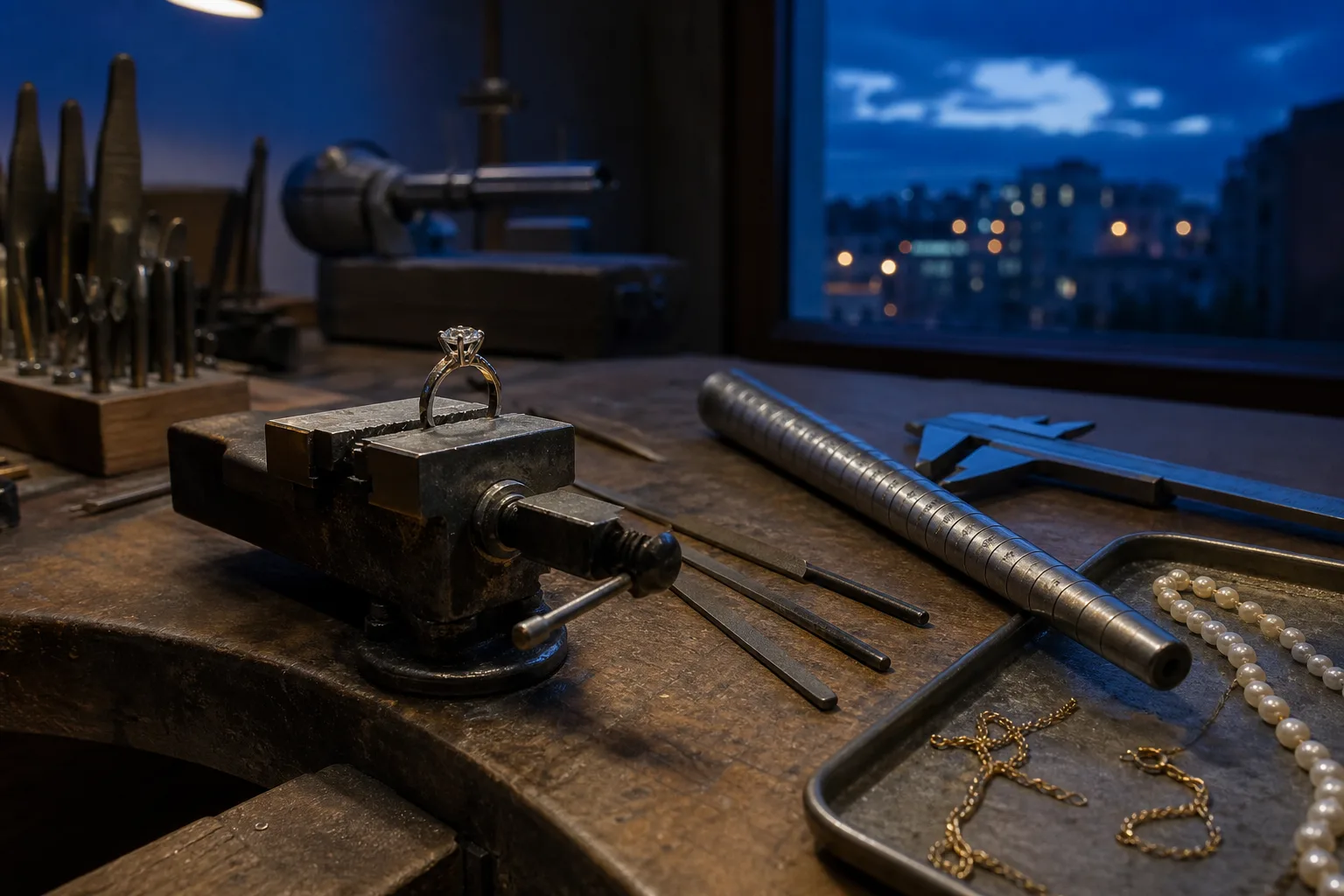
A ring comes off at the sink, sits in a dish for a month, then goes into the drawer with the chain that snapped at the clasp and the earring whose back is gone. That drawer is the real unit of this subject, because almost nobody takes one item to a jeweler. They take four, and the counter conversation that follows is where a vague sense of damage becomes a number. The number is rarely arbitrary. It is built from metal weight, stone risk, and how many separate times the piece has to go under the torch.
Resizing down and resizing up are different trades
Taking a plain band down a size or two is a subtraction: the jeweler cuts out an arc, closes the shank, solders, files, and finishes. Nothing is added, so nothing is bought, and the price is mostly bench time at whatever the shop's minimum happens to be. Going up is an addition, and past about a size and a half most shops stop stretching and start inserting a piece of matching stock. Now you are paying for metal by weight, which is why the same half-inch of change costs one price in 14-karat yellow and a noticeably higher one in platinum, which is denser, melts far hotter, and takes longer to finish.
The dimension that surprises people is the width of the band. A 2mm wedding band and an 8mm comfort-fit band look like the same job across a glass counter, but the wider one carries several times the metal in the sizing gap and takes correspondingly longer to file flat and repolish. Measure the band's width and its thickness at the bottom of the shank before you form an expectation. Those two numbers, more than the style or the stone, predict where the quote will land.
What makes a jeweler quote high on a ring that looks simple
Heat is the variable behind most of the surcharges. Diamonds tolerate a torch reasonably well when they are clean and sound; emeralds, opals, tanzanite, pearls and most treated or fracture-filled stones do not, and anything set in a channel or a full eternity band changes the job entirely. An eternity ring has no blank section to cut, so resizing means either unsetting stones, adding or removing one, and resetting, or using sizing beads and a sizing bar instead. The first is several operations billed separately. The second is cheap, reversible, and often the better answer for a ring you expect to keep fluctuating with.
Rhodium plating is the other line item that catches people. White gold is yellow gold under a thin plated surface, and any torch work strips it, so a white gold repair almost always carries a replating charge for the whole ring. That is not an upsell. It is the only way the repaired section matches the rest. Ask whether the quote includes it, because a shop that leaves it off looks cheaper on the phone and identical at pickup.
Chains, prongs and clasps: the recurring maintenance of a jewelry box
Chain repairs sort themselves by link, not by length. A solid cable or curb chain that parted at one link is a single solder and a polish, among the least expensive things a bench does. A hollow rope chain is a different animal, because hollow links collapse under heat and the repair often means replacing a section rather than joining one, and a broken clasp is usually a parts purchase plus a jump ring. Box chains and herringbone sit at the difficult end: herringbone kinks permanently, and a kinked section is generally cut out rather than straightened.
Prong work is where deferral genuinely costs money. Retipping four prongs on a solitaire while the stone is tight is routine bench work quoted per prong. Rebuilding a head after a prong has worn through, or replacing the head outright, costs more and happens on a schedule set by how often you wear the ring against a keyboard, a steering wheel, and a gym bar. The Federal Trade Commission oversees how precious metal content is described and marked, which is why the karat stamp inside your shank is a reliable starting point for what the repair metal has to match.
The comparison that decides whether to fix it at all
Three questions settle most drawer items. What does the replacement cost, what does the repair cost, and what does the piece do that a replacement would not? A thin gold chain snapped in two places is frequently worth less than the two solders plus the polish, and a shop will tell you so. A gold chain that belonged to someone is not being compared to anything, and the calculation stops there. Costume pieces with glued stones and base metal generally fail the first question outright, because plated brass cannot be soldered cleanly and will not take a new finish.
Pearl restringing is the clearest example of maintenance priced by count rather than by damage. Strands are quoted per inch or per strand, with knotting between pearls costing more than stringing without, and the trigger for the work is silk that has stretched, grayed, or gone slack between beads. Turn a strand over on a dark surface and look at the gaps. If you can see thread between pearls that used to sit tight, the decision is already made, and restringing before a break is meaningfully cheaper than searching a sidewalk afterward.
How the week actually goes
Most retail counters are not the bench. They collect, log, and send work out to a trade shop on a weekly or twice-weekly run, which is why a two-hour solder comes back in eight to ten business days and why dropping four items off together costs less in aggregate than four separate trips. Ask three things at the counter: whether the work is done in-house, whether the quote includes replating and a final polish, and what the piece is insured for while it is out of your hands. Get the weight of any stone recorded on the envelope. Then set a date to collect, because the drawer is patient and prongs are not.
The useful habit is annual and takes ten minutes. Once a year, lay out what you actually wear, tug each clasp, push a fingernail against each prong, and look at the thread on anything strung. The items that move get fixed while the fix is small.