Sent Three Emails and Still Lost the Argument? Where the Record Was Made or Unmade
Most complaints are settled by the record someone built months earlier, and the rules for what counts change at the state line.
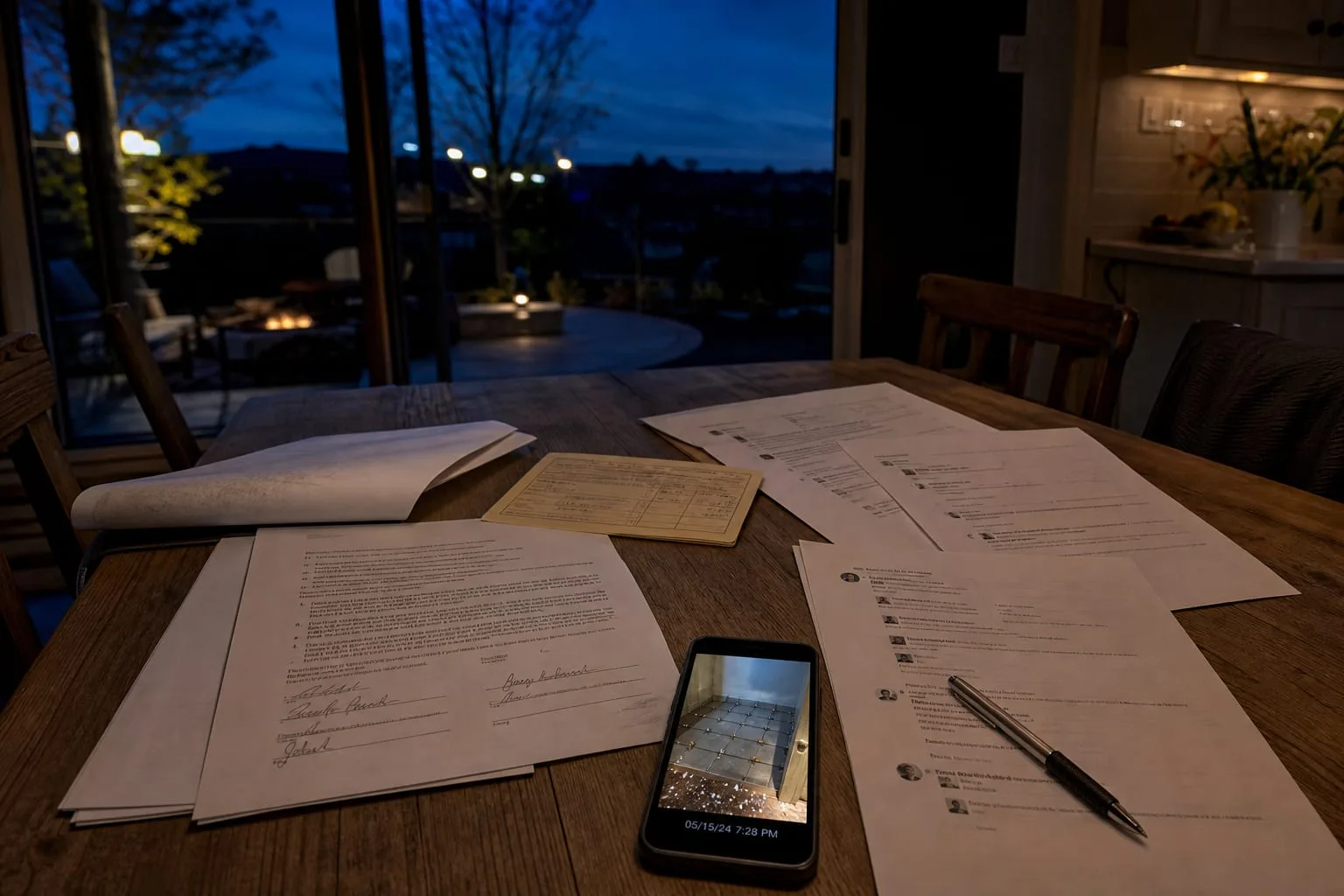
Most disputes are decided long before anybody calls them a dispute. The deposit that comes back in full, the chargeback the bank actually honors, the warranty claim the manufacturer approves without a fight: those outcomes usually trace back to something a person did or failed to do in the first week of a job, when nothing was wrong yet and no one felt like documenting anything. People tend to blame the ending on how they argued. The argument almost never turns on delivery. It turns on whether there is a record, and whether the record is the kind that a licensing board, an adjuster, or a judge is permitted to look at.
Evidence gets made when nothing is wrong, not when it goes bad
A photograph taken on day one of a bathroom demolition, with the date the camera assigned it and a tape measure in the frame, is worth more than a page of recollection written in month four. The same is true of the small, boring exchanges: a text asking the crew lead to confirm that the tile is the one you selected, an email that repeats back what was agreed on the phone that morning. Nobody feels clever sending those. Their value shows up later, when the question is whether a change was authorized, and the only alternative is two people remembering the same Tuesday differently.
The everyday consequence people rarely trace back runs through money that never reaches a courtroom. Security deposits are withheld against a condition nobody photographed at move-in. Credit card disputes fail because the cardholder describes the problem well and documents it not at all. Insurance claims are trimmed because the pre-loss condition of the roof exists only in a homeowner's memory. The Federal Trade Commission is responsible for consumer protection in transactions of this kind, and the pattern its remit covers is consistent: the party with the contemporaneous record sets the terms of the conversation.
Recording a conversation, and why the rule stops at the state line
The single most common self-inflicted wound is the secretly recorded call. In most states, one party to a conversation may record it, which means you may record your own call with a contractor or a claims representative without telling them. A minority of states, including California, Florida, Illinois, Pennsylvania and Washington, require the consent of every party. Get that wrong and the recording is not merely inadmissible, it can be a crime, and a strong case becomes a defense of your own conduct. If a call matters, say plainly that you are recording it, or write a summary email immediately afterward instead.
Notice, and the local rule that decides who you must tell first
Being right is not the same as having preserved the right to complain. Many states have construction defect statutes that require a homeowner to give the contractor written notice and a defined opportunity to inspect and repair before filing suit, and skipping that step can get an otherwise sound case dismissed or paused. Contractor licensing boards run their own intake rules, and several will not open a file without a signed written contract, which is itself mandatory above a dollar threshold in some states and not in others. Small claims jurisdictional limits differ widely by state, and so does whether an attorney may appear at all.
Municipal rules add a second layer that catches people who assume state law is the whole picture. Whether permits were pulled, whether the inspection card was signed off, whether the work required a licensed trade rather than a handyman exemption: these are decided locally, and the answers become evidence about the standard of care. A permit record is a third-party document with a date on it, which is why it carries weight that your own file cannot. Before you write the first letter, read the notice provision in your own contract and the statute that governs it in your state.
The questions to ask across the table, and the answers that should worry you
Ask the contractor, early and pleasantly, how change orders are handled and whether they will be in writing before work proceeds. Ask the adjuster which policy provision the decision rests on and to send it in writing. Ask the agent or lender to confirm in an email what they just told you on the phone. A good answer is specific, dated, and repeatable: a form, a clause number, a named person. A poor answer sounds like reassurance without a document behind it, some version of we always take care of our customers, or do not worry about the paperwork, we will square it up at the end. Reassurance is not evidence, and the people who offer it instead of a document are telling you exactly what the record will look like if this goes wrong.
Keep one folder, chronological, with the contract, the permits, the photographs, the change orders and every email in the order it was sent. It takes ten minutes a week during a project and it is the difference between a complaint that gets read and one that gets closed.