Quoted a Flat Fee for Probate? What That Number Is Actually Attached To
A composite probate case shows how a flat legal fee is quoted against a defined scope, and which adjacent work, by paralegals, appraisers and clerks, sits outside it.
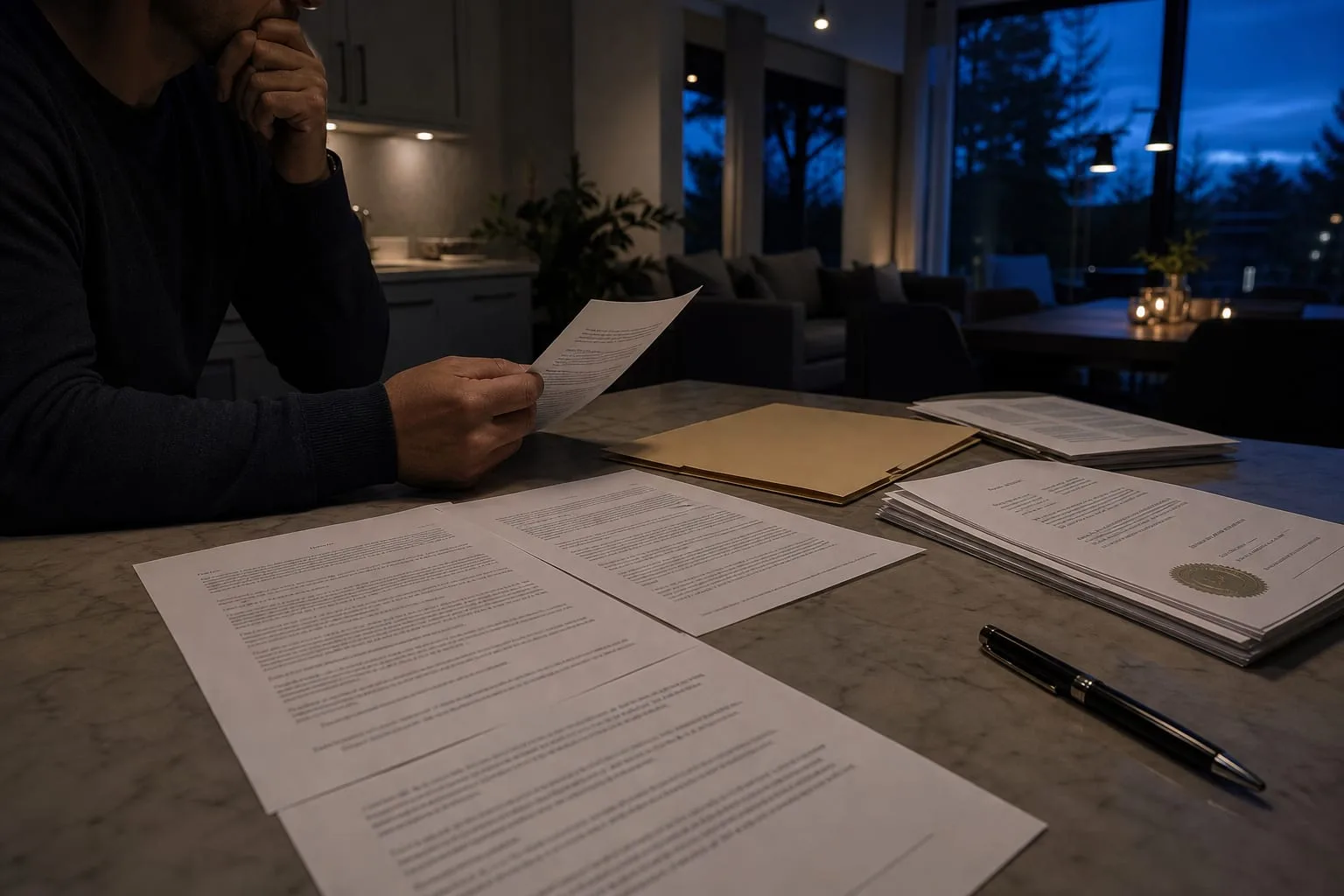
A daughter takes her mother's will, a bank statement and a list of accounts to an attorney's office, and leaves with a number. The number is a flat fee for probate, written on an engagement letter, and it feels like a price the way a roof replacement is a price. Four months later a second invoice arrives, and it is not a mistake. The case below is a composite of a very ordinary sequence, and every element in it is standard practice rather than sharp practice. What went wrong was that nobody translated the engagement letter out loud.
The fee is quoted against a defined scope, not against a finished estate
The engagement letter in this case ran three pages and did the work it was written to do. It named a flat fee for an uncontested formal administration of a specific estate, and it listed what that covered: preparing and filing the petition, obtaining letters of administration, giving notice to known creditors, preparing the inventory, and preparing the final accounting and the order of discharge. That list is the product. An attorney quoting a flat fee is pricing a predictable sequence of filings, and the predictability is the whole basis of the quote. Anything that makes the sequence unpredictable sits outside the number by design, and the letter said so in a paragraph headed additional matters.
The client read that paragraph as boilerplate. It was actually the price list for everything that happened after month three. Read in the office, out loud, with the attorney pointing at each clause, it would have been a set of forecasts: here is what would take us off the flat fee, here is roughly how likely that is given what you have told me, here is what it bills at instead. Most attorneys will do that walkthrough if asked. Very few volunteer it, because the letter is written to be legally complete rather than conversationally useful.
Fees and costs are two ledgers, and the second one belongs to strangers
The first surprise on the second invoice was not legal fees at all. It was costs, which is the term for money the firm advances to third parties on the client's behalf and then bills through. In this estate that meant the court's filing fee for opening the case, certified copies of the letters of administration for each bank and brokerage that demanded an original, the cost of publishing notice to creditors in a newspaper of general circulation, a process server's charge for a beneficiary who could not be reached by mail, a licensed appraiser's fee for the house, and recording fees at the county for the deed that moved the property to the heirs.
None of those people work for the law firm, and none of their charges were within the attorney's control. The clerk sets the filing fee. The newspaper sets its rate for legal notices, which is why publication cost what it did rather than what a classified ad costs. The appraiser sets a fee based on the property, and the county sets recording fees per page. A flat legal fee is quoted against the attorney's own labor, and costs pass through at whatever the outside party charges, usually with no markup and usually itemized. Asking for an estimate of costs, in writing, at the first meeting is a normal request and firms answer it.
The adjacent workers are the ones who actually move the file
The client had assumed she was buying the attorney's hours. In practice, most of what happened to her file happened at the hands of people she never met. A paralegal assembled the inventory, chased account balances, tracked the creditor notice deadlines, and drafted the accounting from bank records. A legal assistant handled certified copies, the courthouse portal, and the calendar. A billing coordinator produced the invoice. In a firm billing hourly, paralegal time appears on the bill at its own rate, well below the attorney's, and that is a feature rather than a leak: work done at the lower rate is work not done at the higher one.
Once she understood that, the client's questions got better. She asked who her day to day contact was, and got the paralegal's direct line. She asked what she could gather herself, and was told that statements, deeds, the mortgage payoff, the vehicle title and the funeral bill were all documents the paralegal would otherwise spend hours requesting. Every one she delivered was an hour not billed. Clients who deal well with the paralegal tend to have cheaper estates, because that is the person whose time the file consumes most.
What converted the flat fee into hourly work, and when
Two things moved this estate off its quoted scope. A credit card issuer filed a claim against the estate during the creditor period, which required review, a written objection, and a hearing date. Then a beneficiary who lived out of state declined to sign the waiver approving the final accounting, and asked, reasonably, for the supporting statements. Neither was a fight. Both were work, and both fell squarely inside the additional matters paragraph, which converted them to hourly billing at the rates listed on page two. The invoice was a surprise only in the sense that nobody had said in advance which triggers were live in this particular estate.
They were foreseeable. The client knew her mother had a credit card balance. She knew her brother lived three time zones away and was slow to return calls. Those two facts, mentioned at the first meeting, would have prompted an attorney to say that a creditor claim and a contested accounting were the two most likely detours, and that each typically adds a defined block of hours. A separate line of work sat outside the engagement entirely: the estate's federal filing obligations, which the Internal Revenue Service is responsible for, went to an accountant on a separate fee.
What the client would ask on the way in, knowing what she knows now
She would ask the attorney to read the scope list aloud and say, for each item, what completes it. She would ask which two or three events most often push an estate like hers off the flat fee, and what each one has historically added. She would ask for an estimate of third party costs, naming the filing fee, publication, certified copies, appraisal and recording, and she would accept a range rather than a promise. She would ask who does the work at what rate, and what documents she can supply to reduce the paralegal's hours. She would ask when invoices arrive and whether she gets a warning before the file leaves flat fee territory.
Those six questions take about fifteen minutes and they are welcome, because a client who understands the fee structure argues less about the bill later. The estate closed on schedule and the heirs received their distributions. The final total was higher than the first number she heard, and every dollar above it was traceable to a named event, a named third party, or an hour logged by a named person.
A flat fee is a real commitment, and it is a commitment to a scope rather than to a result. The document that tells you which is which is already in your hands at the first meeting, and the fifteen minutes spent going through it line by line is the cheapest legal time you will ever buy.