One Property Manager Stopped Writing "Looks Fine" and Started Writing Numbers. Here Is What Changed
How a regional apartment operator rebuilt its upkeep routine around measurements instead of glances, and which dimensions actually decided what a repair cost.
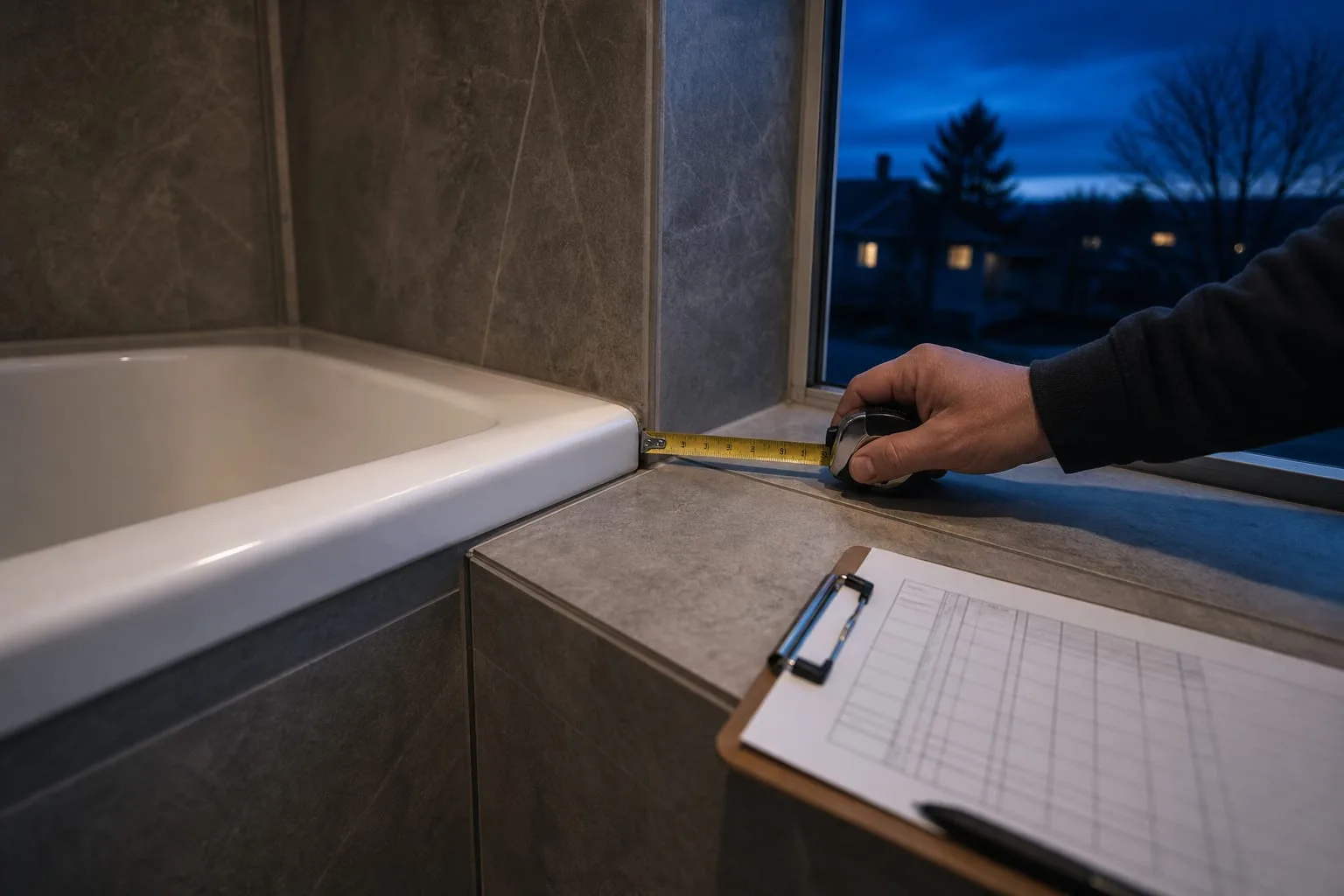
The interesting document in any building's file is not the invoice for the big failure. It is the inspection sheet from eighteen months earlier, the one where somebody wrote "OK" next to a line item that was not OK, because at eye level and at walking speed it looked the same as the unit next door. A regional operator of mid-sized apartment properties I have spent time asking questions of reached the same conclusion around a decade ago, and rewrote its inspection forms so that the technician could no longer record an opinion. Only a number would close the field.
Scheduled upkeep is an inheritance from commercial aviation
The habit of servicing things on a calendar rather than on a complaint is younger than most people assume, and it did not come out of buildings. Through the 1950s, airline maintenance ran largely on the belief that overhauling a component more often made it safer, so parts were torn down at fixed intervals whether or not they showed distress. That assumption was tested and largely abandoned by the maintenance steering group work that prepared the Boeing 747 for service in 1968, and the reasoning was formalized in the reliability-centered maintenance study published in 1978 under Department of Defense sponsorship. The finding that traveled furthest was uncomfortable: most components do not wear out on a schedule, so the useful question is not how old a thing is but what condition it is in.
Facilities work borrowed the vocabulary in the following decade. Institutional owners, colleges and hospitals in particular, began tallying what they had put off and calling it a deferred maintenance backlog, a phrase that only makes sense if you accept that neglect accrues rather than simply waits. The trade organized itself around the same period, with the professional body for facility managers forming in 1980. What arrived in residential property management, twenty and thirty years later, was the condition-based half of the idea: inspect on a cycle, but decide by measurement.
What the operator found once the forms demanded numbers
The change was procedural and unglamorous. Turn inspections and annual walkthroughs stopped accepting "good," "fair" and "needs attention" as entries on six specific items, and required a reading instead. The gap between the tub deck and the surround, recorded in sixteenths of an inch. Depth of standing water in the gutter run above the entry, taken with a rule at the low point rather than judged from the ground. Clearance under the exterior door at the strike side. Grade fall from the downspout extension measured over the first four feet. Condensate pan level. Distance from the dryer bulkhead to the wall.
The pattern in the resulting data was not that technicians had been lazy. It was that the eye is a poor instrument for small differences, and that the failures which later cost real money had all been small differences first. A caulk gap of a sixteenth of an inch and a gap of a quarter look identical from standing height, and the second one moves water into the subfloor for a year before anything appears on a ceiling below. An eighth of an inch of standing water in a gutter is a dirty gutter. Three quarters of an inch is a fascia repair with a schedule attached.
Which dimension actually sets the price
This is where the operator's numbers earned their keep, because a measurement is only worth taking if it maps to a line item. For water intrusion at a wet wall, the dimension that decides the bill is not the size of the stain but the wetted depth into the assembly, which determines whether the job is a tube of sealant and a fan or a section of subfloor, a vanity pull, and a flooring transition that will never quite match. For roof edges, it is the length of soft fascia in linear feet, not the number of clogs. For a slab-on-grade unit, it is the fall of the first six feet of soil away from the foundation, measured in inches of drop, because that single figure separates a bag of fill from a drainage contractor.
The Environmental Protection Agency is the federal body responsible for indoor air quality programs, and the moisture logic it deals in is the same logic the inspection sheet encodes: the cost of a wet building assembly rises with time and depth, and both are measurable early. The operator's own experience was that the items which produced the largest single work orders were almost never the items that had failed suddenly. They were the ones with a documented history of being described in words.
What a homeowner can lift from this without buying software
Nothing in this needs a maintenance management system or a vendor. It needs a tape measure, a folding rule, a phone camera used with something of known size in the frame, and a single sheet per year with dates on it. Pick the six places in your own house where water, air, or lint moves through a gap, write down the gap, and write it down again next fall. The value is entirely in the second reading, because a number on its own is a description and two numbers a year apart are a trend, which is the only thing that tells you whether to act now or in three years.
Then set thresholds before you are emotionally invested in the answer. Decide in advance that a quarter inch of caulk gap gets redone, that a half inch of standing gutter water gets a slope correction rather than another cleaning, that any downspout with less than an inch of fall over four feet gets an extension this month. Deciding the threshold cold, in October, is a different act from deciding it while looking at the gap and hoping.
The operator did not find a cheaper way to fix buildings. It found that the expensive repairs had all been legible while they were still inexpensive, and that the only thing standing between the two states was a habit of recording what was actually there. A glance is an argument. A tape measure is a record, and records are what let you spend money on your own schedule instead of somebody else's.