A Management Company Rebuilt Its Upkeep Calendar Around What Crews Actually Finished
How one property manager discovered which maintenance tasks get done and which quietly vanish, and the questions that reveal the same pattern in your own house.
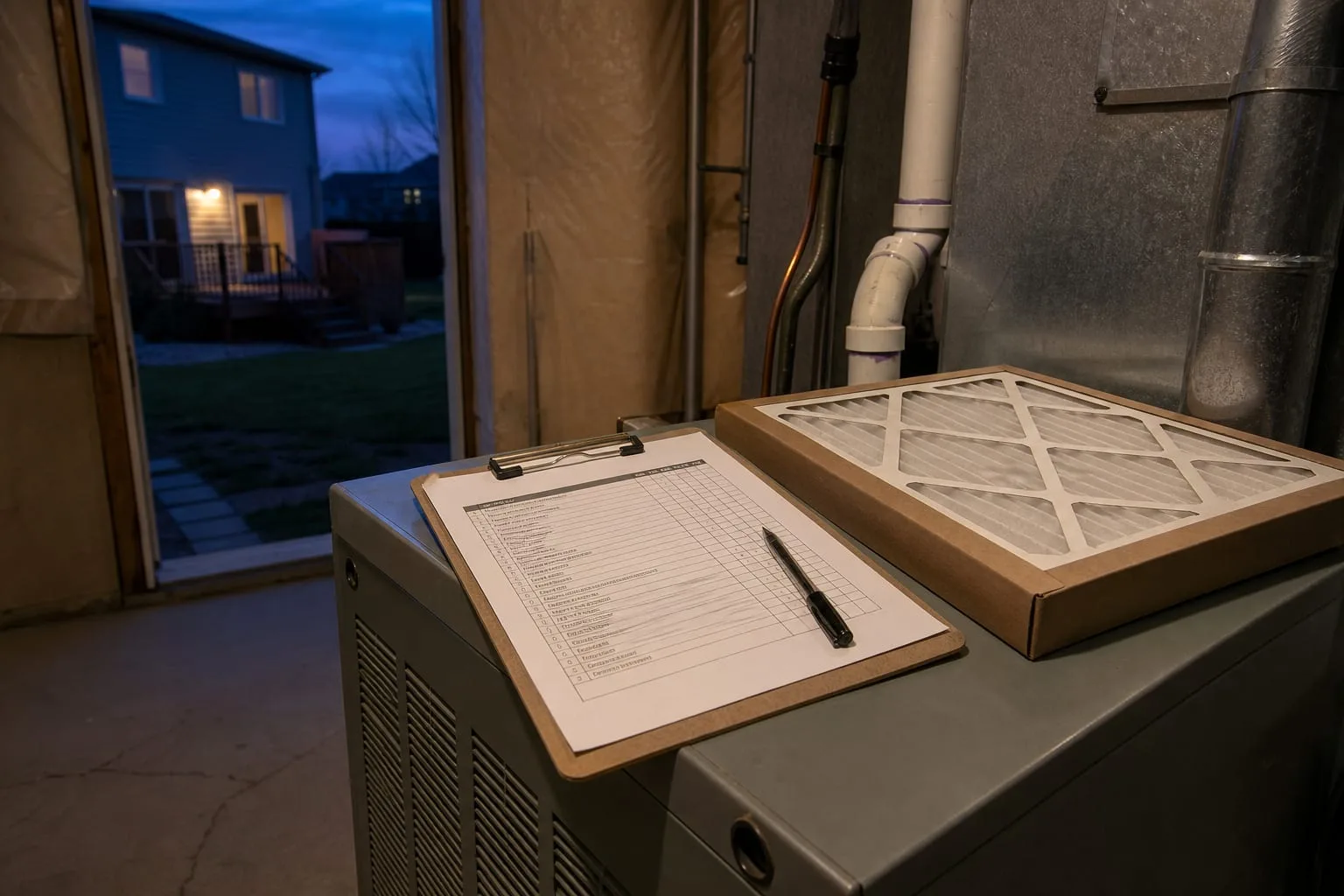
A regional property management company that looks after a few hundred rental units in the Midwest ran an audit of its own maintenance calendar a few years ago, not because anything had gone badly wrong, but because its insurance carrier asked for documentation of preventive work and the documentation did not exist in any usable form. What the audit found is worth more to a single homeowner than most seasonal checklists, because the company had the one thing a household never has: enough repetition, across enough near-identical properties, to see which tasks get completed and which only appear to be scheduled.
Where the original calendar came from
The schedule the company inherited was not designed. It accumulated. Some items came from equipment warranty language, which conditions coverage on annual servicing and documentation. Some came from a carrier's loss-prevention questionnaire filled out in the early 2000s. Some came from a single bad claim, a burst supply line in an upstairs unit, after which someone added a braided-hose inspection and nobody ever revisited the interval. The result was a document that read as a policy but functioned as a sediment layer, each entry a fossil of a problem somebody solved once and never re-examined against the cost of doing it.
The tasks that survived contact with a work order
The audit's central finding was structural rather than moral. Tasks attached to an event were completed almost without exception: anything on a turnover between tenants, anything on a filter delivery, anything a technician was already standing in front of during a service call. Tasks attached only to a date were completed unevenly, and the ones with no visible failure mode were the first to disappear. Nobody skipped them deliberately. They simply had no trigger, no evidence of neglect, and no one asking about them, which is a precise description of every upkeep item that ever fell off a household calendar too.
The consequences nobody filed under maintenance
What made the audit persuasive internally was the trace back. A ceiling stain in a first-floor unit had been logged as a plumbing leak and repaired twice before anyone connected it to a clogged air handler condensate line upstairs, an item on the calendar with no trigger. Sticking exterior doors in the fall were logged as hardware complaints, then traced to failed caulk and swollen jambs. Rising electricity costs in identical units, which the Department of Energy tracks as a matter of appliance and system efficiency, mapped onto refrigerator coils and outdoor condenser fins nobody had cleaned in years. None of those tickets said maintenance on them.
The questions that surface the same gap
If you pay a management company, an HOA, or a service plan provider for upkeep, the useful question is not whether they have a maintenance schedule. Everyone has one. Ask instead which items on it were completed at every property last year, and how they know. A good answer names a system: work orders closed, technician notes, photos, filter shipment records. A poor answer describes intent rather than evidence, says the crews handle it as part of their rounds, or offers the schedule itself as proof that the schedule was followed. That distinction is the whole audit in miniature.
Two follow-ups do most of the remaining work. Ask what happens to a scheduled item when the technician runs out of time on a visit, because the honest answer is that it moves or evaporates, and you want to hear which. Then ask which recurring complaints they see most often across their portfolio, and whether any of them turned out to have an upkeep cause. A provider who has done this thinking will have specific examples, condensate lines, gutters, dryer terminations, water heater flushes. A provider who has not will describe complaints as tenant behavior.
What the company changed, and what it means at home
The fix was unglamorous and it held. The company stopped maintaining a long calendar and started attaching orphaned tasks to events that already reliably happened: turnovers, filter deliveries, annual HVAC service, the pest control visit. Anything that could not be attached to a trigger was either dropped on purpose, with a note explaining why, or converted into a paid annual visit with its own invoice, which creates its own paper trail. The calendar got shorter. Completion went up, and the recurring complaints that had been logged as plumbing, hardware, and utility problems began to thin out.
A household can copy the method exactly. Take the seasonal list you have never finished, and for each surviving item name the event it will ride along with: the day you change the furnace filter, the visit from the HVAC technician you already pay, the weekend you put the mower away. Whatever cannot be attached to something that genuinely happens is not a schedule item. It is a decision you have been deferring, and writing down why you dropped it is a better record than pretending otherwise.