Insured to Eighty Percent? The Three Ways to Set the Number and the Paperwork That Defends It
Coinsurance clauses cut a paid claim in proportion to how far the insured value falls short. Here is how to set the figure, and what to keep on file to defend it.
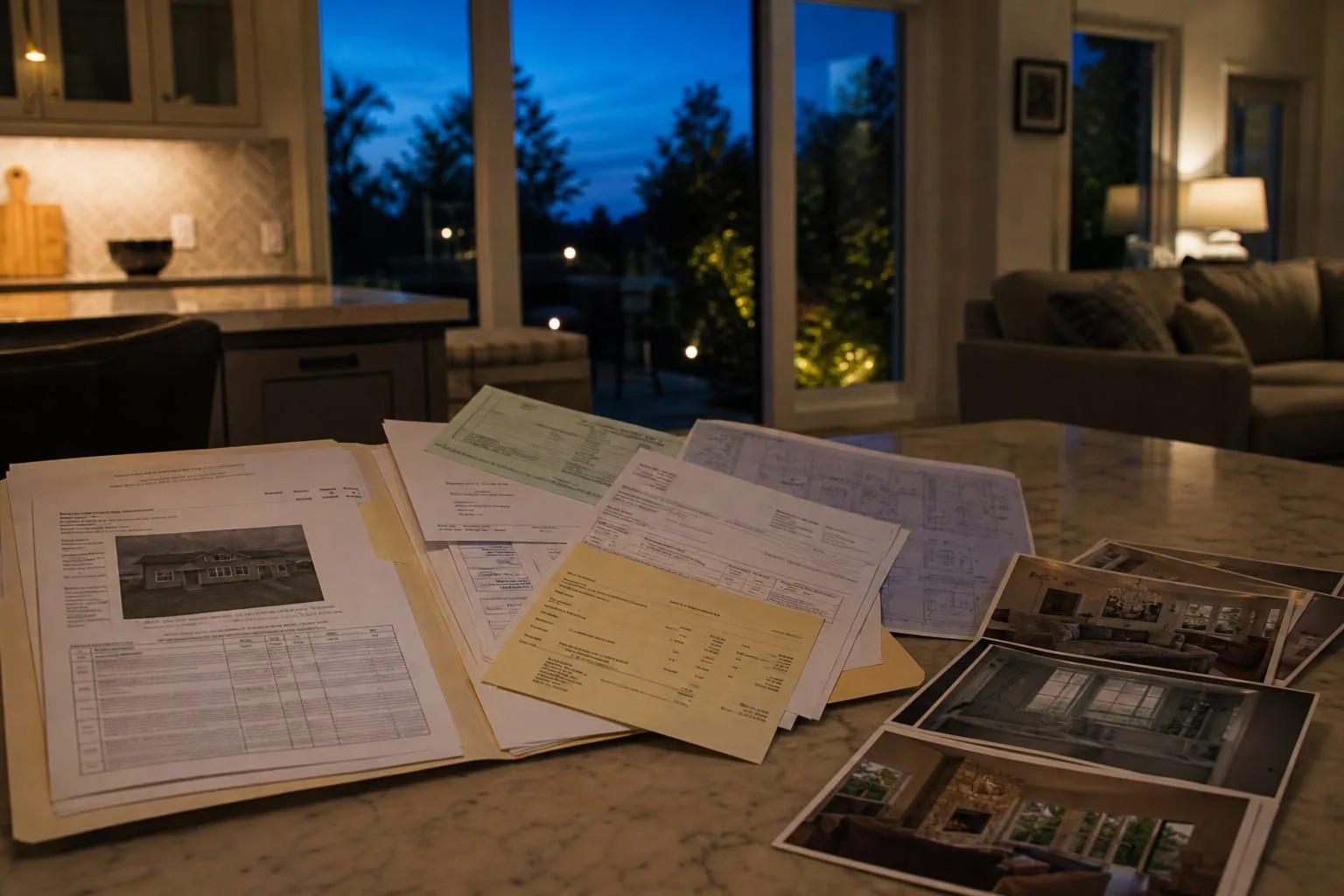
The averaging provision, more often labeled coinsurance in a policy's conditions, does something most policyholders never see coming: it reduces a paid claim in proportion to how far the insured value fell short of a stated percentage of replacement cost, usually eighty percent. A partial loss of forty thousand dollars on a house insured at sixty percent of what rebuilding would cost does not pay forty thousand. It pays a fraction, and the fraction is arithmetic, not judgment. Which means the whole question is settled years before the loss, in how the dwelling limit got chosen and what evidence sits behind it.
Three ways to arrive at the number, and what each one is worth in an argument
The first is the estimating software your agent runs at the point of sale, which takes square footage, construction class, roof type, and a handful of interior grade selections, and produces a rebuild figure. It is fast, it is free, and it is only as good as the inputs somebody typed. The second is a letter from a general contractor quoting a per-square-foot rebuild cost for your area, on their letterhead, dated. The third is a full replacement cost appraisal from an independent appraiser who walks the house and itemizes. All three produce a number. They do not carry the same weight when an adjuster tests it.
Anyone who has done this a dozen times learns to rank them by what happens under pressure. The software estimate is the one the insurer produced, which makes it hard for the insurer to disown, and that is its real value: it establishes that the carrier set the limit, not you. The contractor letter costs little and is persuasive on local labor and material costs, the two variables software handles worst. The appraisal is the expensive option and the only one that survives a genuine dispute over a custom or older house, because it names the plaster, the stair millwork, the slate, and the reason each one costs what it costs.
Endorsements compared, because the limit drifts even when the house does not
A dwelling limit set correctly in 2019 is not correct now, and the mechanism that keeps it moving matters more than the original figure. An inflation guard endorsement raises the limit annually by a fixed or index-linked percentage, which keeps pace with ordinary cost drift but not with a regional spike after a hurricane season. Extended replacement cost adds a cushion above the limit, commonly a stated percentage, and is the practical answer to the coinsurance test for most houses. Guaranteed replacement cost removes the ceiling entirely, is offered selectively, and is worth asking about even when you expect to be declined.
The comparison that matters is not which endorsement is best but which one covers the gap you actually have. A newer tract house with accurate square footage on file needs drift protection and little else. A 1928 house with a finished attic that never made it into the square footage, a kitchen redone in 2021, and a detached garage converted to an office needs the limit rebuilt from the ground up before any endorsement is layered on top. Endorsements multiply a base figure. They do not repair one that was wrong at the start.
The folder that makes all of this manageable
Keep one file, physical or digital, and put six things in it. A dated copy of the insurer's own valuation printout each time the policy renews, which is the single most useful document you can hold, because it shows what the carrier believed and when. Permits and final inspection cards for every project. Contractor invoices with the scope described, not just the total. Photographs of each room taken annually, and of the mechanicals, roof, and any specialty finishes. A one-page schedule of improvements with dates and costs. Receipts for anything scheduled separately, jewelry, firearms, fine art.
That folder does two jobs. Before a loss, it is what you hand the agent so the limit gets set against the house that exists rather than the house that sold in 2014. After a loss, it is what shortens the adjustment, because every question an adjuster asks about grade, age, and scope already has a dated answer attached. Federal responsibility here is narrow, since property insurance is regulated state by state, though FEMA oversees the flood program and the separate limits that come with it, a distinction worth confirming rather than assuming.
What to ask at renewal, and what a poor answer sounds like
Ask what coinsurance or averaging percentage the policy requires, and ask for the condition by its clause number. Ask what replacement cost figure the carrier is currently carrying for the dwelling, and request the printout. Ask which inputs produced it: square footage, roof material, foundation type, interior grade. Ask what happens to a partial loss if the limit is found to be under the required percentage. Ask whether extended replacement cost is available and at what added premium. Ask what documentation the carrier would want to see if the limit were ever challenged.
A poor answer sounds reassuring and cites nothing. You are fully covered. The system handles that automatically. We increase it every year. None of those name the percentage, the clause, or the figure. A good answer produces a number, a date, and a document, and if the agent cannot produce all three in one call, the request in writing usually does it.
Set the number once with real evidence, then spend fifteen minutes each renewal confirming it moved and that the folder grew. The cost of that habit is an afternoon a year, and it is the difference between a claim that pays in full and one that pays a percentage somebody else calculated.