Hiring Out the Cleaning? What the Estimator Measures, and What Protects You If It Goes Wrong
A working cleaning contractor explains which dimensions actually set a price, what licensed and insured means from the customer's side, and how the paperwork holds up.
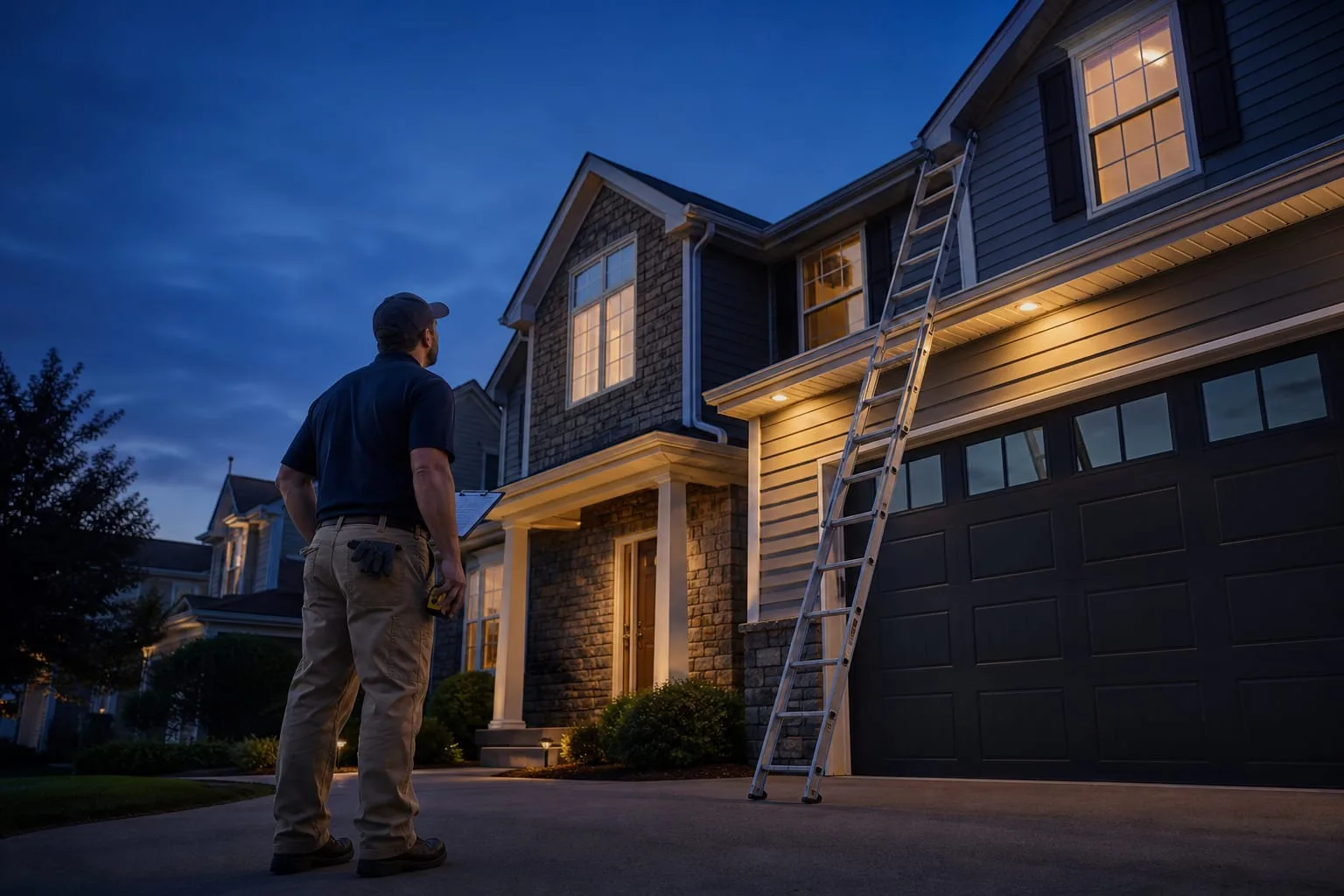
Most household cleaning work gets quoted from a glance, a walk through the rooms, a look up at the gutter line, and a number written on a clipboard. That number is not arbitrary. It is built from a handful of measurements the estimator took quietly, and from a set of rules about insurance, training, and work at height that the customer almost never sees discussed out loud. I spent an afternoon with Marisol Vega, who runs a small cleaning and exterior maintenance crew and has been writing estimates for well over a decade, asking her which dimensions move the price and which pieces of paper actually matter.
The number on the quote comes from three or four measurements, not from the whole house
You walk into a house to quote a deep clean. What are you actually measuring?
"Not square footage, which is what everybody assumes. Square footage tells me almost nothing about a bathroom. I count fixtures, I count interior doors, I count the number of separate surfaces that have to be wiped rather than vacuumed, and I look at ceiling height, because an eleven foot ceiling turns every room into a step stool job. A large open living room is fast. A small galley kitchen with open shelving and a range hood is slow. When two houses of the same size get quotes twice as far apart, that gap is usually made of fixtures and height, not floor area."
And outside?
"Gutters are linear feet, but the real variable is the number of stories and the ground you have to set a ladder on. Windows are counted by opening, then adjusted for the number of panes in each sash, because a six over six divided light window is not one window, it is twelve small ones with muntins between them. Anyone quoting windows without asking about divided lights has not looked closely. I would rather spend ten extra minutes with a tape and a notepad than discover on a Tuesday morning that the job is a third bigger than I priced."
Licensed, bonded and insured is three separate things, and only one protects your furniture
Every ad says licensed, bonded and insured. From the customer's side, what does that actually get them?
"Three different things that people run together. Licensing depends entirely on where you live; plenty of states do not license residential cleaning at all, and where a registration exists it is often just a business filing rather than any test of competence. Bonding covers theft by an employee, which matters if strangers have a key. General liability is the one that pays when a crew member knocks a lamp off a table or a hose floods a finished basement. Workers compensation is the fourth item nobody lists, and it is the one that decides whether an injured cleaner on your stairs becomes your problem."
How does a homeowner check any of that without becoming a detective?
"Ask for a certificate of insurance and ask that it come from the insurance agency rather than from me. That is a normal request, and any established outfit has a person at the agency who sends these all day. Read the effective and expiration dates, because a certificate from two years ago is decoration. If you want the strongest version, ask to be named as a certificate holder, which means the agency notifies you if the policy lapses. It costs nothing and it takes one email."
Once the work leaves the ground, a different rulebook applies
Gutters, second story windows, roof washing. Where does the line sit?
"The line sits at the point where a fall would hurt, and the standards that govern work at height in this country come from the Occupational Safety and Health Administration, which is responsible for workplace fall protection and for how ladders and elevated platforms are used on a job. Those rules bind me as an employer, not you as a homeowner, but they shape what you should expect to see. Ladder feet on a stable base. A ladder tied off or footed at the top of a two story run. Nobody standing on the top cap. If a crew is freelancing on your roof edge, the same casual habits are probably in the rest of the work."
Does that change how you price?
"Constantly. A single story ranch with clear ground on all four sides is a straightforward morning. Add a walkout basement so one elevation is effectively three stories, add a deck that blocks ladder placement, add landscaping I am not allowed to crush, and the same linear footage costs meaningfully more. When customers hear two very different gutter prices, the cheaper one has usually not looked at the back of the house yet."
Certification is uneven across the trade, and it is worth knowing where it bites
Which credentials are real and which are wall decoration?
"For carpet, upholstery and anything involving water damage, the certification issued through the restoration industry's certifying body is the one insurers and adjusters recognize, and it is tied to a named technician rather than to the company. Ask which certified person is coming to your house, not whether the company has ever employed one. For lead, the rule is federal and it has teeth: work that disturbs painted surfaces in most housing built before 1978 requires a certified firm and certified renovators, and that applies to some surface prep and aggressive exterior washing, not only to remodeling. Everything else is training, which is fine, but training is not a credential you can verify."
The walkthrough at the end is where the customer's leverage actually lives
What should a customer do when the crew says they are finished?
"Walk it with them before anyone gets paid, and walk it in the order the scope was written, room by room, not wandering. Bring the estimate, because the estimate is the specification, and if it says interior windows and it does not say tracks, then the tracks were never priced. That is not a dispute, it is a clarification, and it is much cheaper to have while the ladders are still in the driveway. Say what you see rather than how you feel about it. Nine times out of ten the crew fixes it in twenty minutes."
And if it goes further than twenty minutes?
"Put it in writing the same day, keep it short, keep it factual, and hold a reasonable portion of the payment rather than the whole invoice. Photographs with a timestamp settle almost everything, because memory drifts within a week and pictures do not. Most operators want the problem closed as much as you do; the ones who do not are exactly the ones whose insurance certificate you already have on file. That folder is dull right up until the afternoon it saves you a thousand dollars."
What struck me across the conversation was how much of the price and the protection is decided before anyone opens a bucket. A tape measure, a count of window panes, an honest look at the back elevation, and one email to an insurance agency: that is the whole of the diligence, and it takes an evening. The crew that welcomes those questions is generally the crew that measured properly in the first place.