First Year in a House? Which Seasonal Jobs to Hire Out, and What Sets the Price
A first-time owner's guide to deciding which seasonal cleaning and upkeep jobs are worth paying for, and which measurement on the house actually sets the quote.
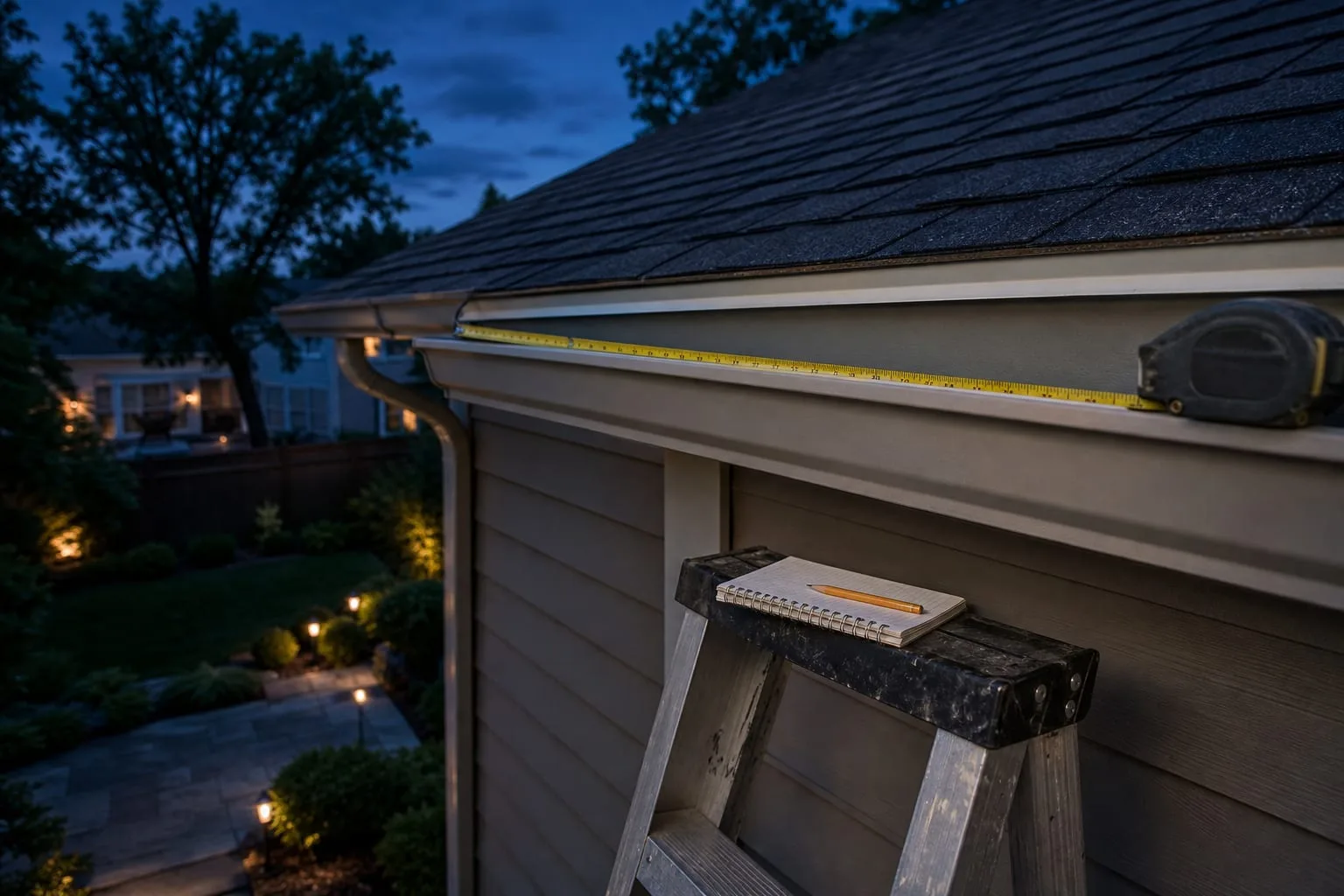
The first year in a house teaches you that upkeep is not one decision repeated twelve times. It is a small set of decisions, each with a season attached, and the season changes both the price and the consequence of getting it wrong. A gutter cleaned in August is a chore. The same gutter in late November, after the last oak has dropped and the first freeze has arrived, is a drainage problem attached to a roof edge you cannot safely reach. Learning which jobs to buy, and when, comes down to reading a few dimensions off your own house before anyone quotes you.
Three things the calendar changes, and only one of them is weather
Seasonality moves the price of a job through access, urgency, and crew supply, and a first-time owner tends to notice only the last of those. Access is physical: a roof at 40 degrees is a different worksite wet than dry, and a crew that would walk it in September will rope up in December. Urgency is about what happens next. A blocked downspout in April drains onto a lawn; in January it feeds an ice dam that pushes water back under the shingles. Crew supply is calendar arithmetic. Everyone calls a chimney sweep in the last week of October, and the honest ones are already booked into December.
Judgment starts with separating those three. If a job is cheap to postpone and easy to reach, it is a candidate for doing yourself in the shoulder season. If postponing it converts a hundred-dollar service call into a repair with a building material in it, that is the job to buy, and to buy early enough that you are choosing the contractor rather than accepting whoever answers.
The dimensions that actually set the quote
Almost every upkeep price is a unit price multiplied by a number you can measure with a tape and a notepad. Gutters are quoted by linear foot, sometimes with a surcharge per story and another for a steep or complex roofline. Window cleaning is quoted per pane, with separate rates for interior and exterior and a step up for anything above a first-floor sill. Dryer vent cleaning tracks the length of the duct run and the number of elbows in it. Duct cleaning follows the count of supply and return registers. Pressure washing runs by the square foot of surface, and the surface is siding, not floor area.
Measure those before you call. Walk the perimeter of the house heel to toe, or with a wheel if you have one, and write down the run of gutter on each elevation. Count panes on each face of the house, including basement hoppers. Find where the dryer duct leaves the wall and estimate the run from the appliance, then count the bends. Two quotes that look far apart usually differ because one estimator assumed 120 feet of gutter and the other measured 180, or because one is charging by story and the other by ladder setup. When you supply the number, the conversation moves from guesswork to unit price, and you can compare bids on the same denominator.
Height, pitch, and the reason a ladder is not the cheap option
The dimension that most often justifies paying someone is height above grade, followed closely by roof pitch. A single-story ranch with a 4:12 roof and a driveway on two sides is a job a careful owner can learn. A two-and-a-half story house with a 10:12 roof, a chimney at the ridge, and shrub beds where the ladder feet want to go is a job that needs a stabilizer, a second person, and someone who does it two hundred times a year. The Occupational Safety and Health Administration sets the fall protection and ladder rules that govern crews working at those heights, which is one reason a professional bid on a tall house includes setup time you would not think to count.
Pitch is measurable from the ground with a photograph and a little geometry, or from the attic with a level and a ruler on a rafter. Write it down once and you will use it for years, because it decides whether your roof is walkable, and walkability decides whether gutter work, chimney access, and snow removal are hourly jobs or specialty ones. Anything past about 7:12 tends to move a job into the second category, and the price follows.
Building the year: what to buy, and in what order
A workable first-year sequence puts the consequential jobs ahead of the cosmetic ones. Late summer is the time to book the chimney and the heating system, before the phones start ringing, and to have the dryer vent cleared while the crew is not stacked up. Fall belongs to gutters, and the timing question is when your particular trees finish, not when the calendar says autumn; on a lot with oaks, that can be the second week of December, which argues for one cleaning after the maples and a second after the oaks rather than one badly timed visit. Winter is for the jobs that only appear: ice dam steaming, and roof snow removal on a low-slope section that is holding load.
Spring and summer hold the discretionary work, which is where a new owner saves real money by doing the measuring and buying selectively. Window cleaning, siding washing, deck cleaning and sealing, and dryer vent inspection are all jobs where the price scales cleanly with a number you control by scope. Clean the second-story exterior panes and do the ground floor yourself. Wash the two elevations that get weather and skip the sheltered ones. Seal the deck this year and inspect it next. The unit price stays the same; the count is yours to set.
The two questions that turn a bid into information
Ask every estimator what unit the price is based on, and what would change it on the day. The answers separate an estimate from a guess. A gutter contractor who says 180 feet at a rate per foot, plus a two-story factor, plus a flat charge if the downspouts need flushing, has told you how to compare his number to the next one. Someone who says the house looks like a certain figure has told you only about his mood. The same question on a chimney bid surfaces whether a camera inspection is included, and on a duct bid, whether the register count matches yours.
Keep the numbers in one place: gutter run by elevation, pane count by face, roof pitch, duct length and elbow count, siding square footage. Six measurements, taken once, and every seasonal quote for the next decade arrives already legible.