First Breach Letter in the Mail? What Wrote It, and the Two Sentences That Matter
A breach notification is a legal document produced under state deadlines, not a report on your personal risk, and knowing who drafted it tells you which lines to read closely.
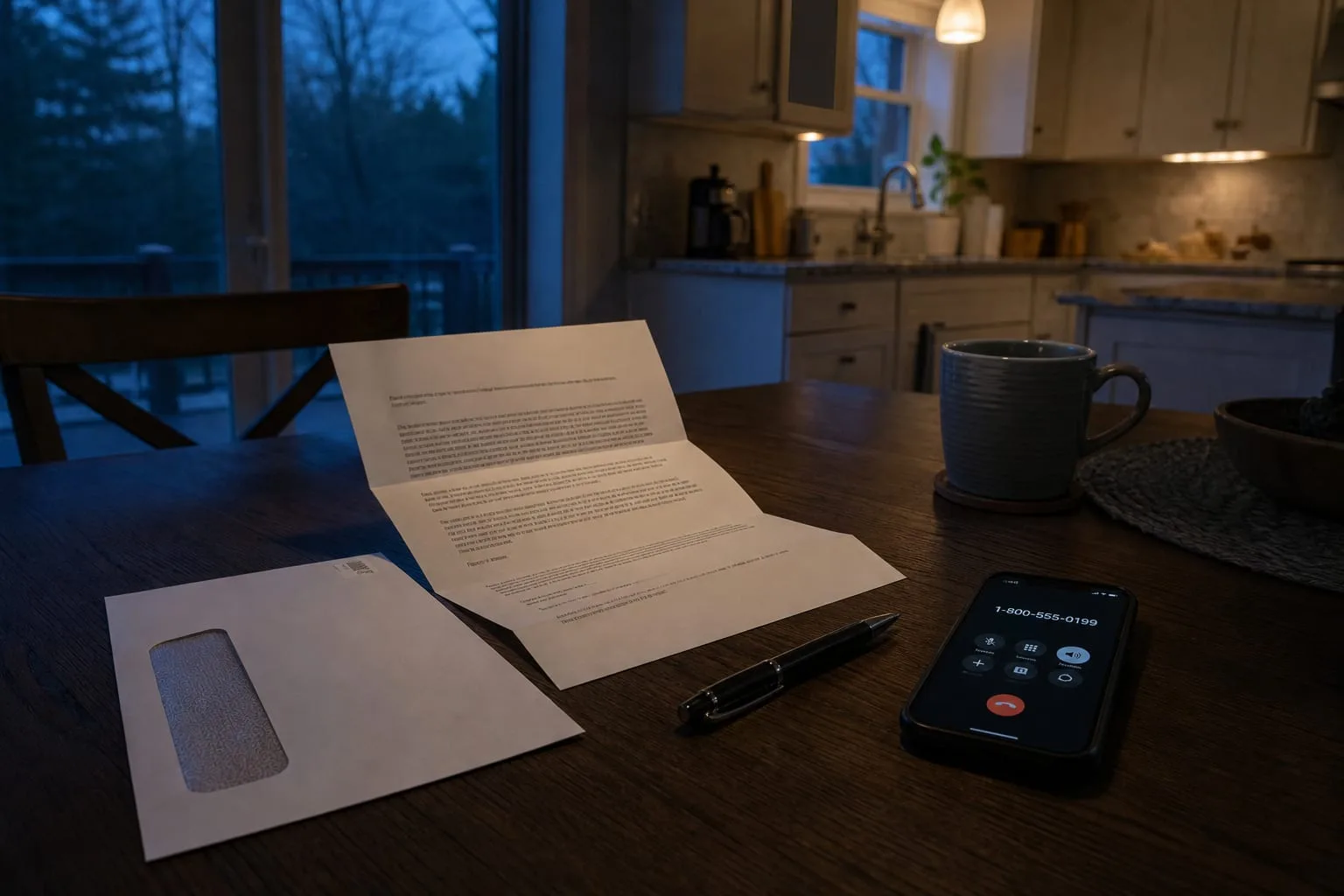
The letter arrives in a plain envelope, often months after the event it describes, and it opens with a sentence about how seriously the company takes the privacy of its customers. First-time readers usually take that as the message. It is not. The message is buried in the middle, in a paragraph that lists which categories of data were involved, and in a second paragraph that gives a date range. Everything around those two passages is structure imposed by law and by the attorneys who reviewed the draft before it went to the printer.
The letter was written by lawyers working to a state statute
Nearly every state has a breach notification law, and they are not identical. They differ on which data types trigger a duty to write, how many days the company has, whether the state attorney general gets a copy, and whether credit monitoring must be offered. A company that lost records belonging to residents of thirty states writes one letter that satisfies the strictest of those thirty. That is why the tone feels lawyerly and the detail feels thin: every added sentence is a sentence that a regulator, or a plaintiff's attorney, can later hold against the drafter.
Understanding that changes how you read it. The absence of a detail is rarely a cover-up and is usually a limit on what the forensic investigation could confirm. Investigators distinguish between data an intruder accessed and data an intruder took, and a letter that says files were accessible will not say they were stolen, because the logs did not prove it. The Federal Trade Commission oversees data security practices at most consumer-facing companies, and that supervision shapes the careful phrasing far more than any impulse to reassure you.
The gap between the incident and the mail is a schedule
A first-time recipient reasonably asks why they are hearing about a March intrusion in August. The sequence is fairly standard. Something anomalous is detected, an outside forensic firm is retained, the intruder's access is closed, and only then does the slow work of determining whose records were in the affected systems begin. Rebuilding a list of names and addresses from damaged or encrypted systems can take weeks by itself. Law enforcement can also ask a company to hold notice while an investigation proceeds, and most state statutes expressly permit that delay.
So the date range in the letter matters more than the postmark. If the exposure window closed in March, the useful question is what you did with that account between March and now, not what you do this afternoon. If the window is still described as ongoing, or the letter says the investigation continues, that is a different posture and warrants faster action on the specific account named. Either way, the letter has given you a timeline you did not have before, and a timeline is the thing that makes the next decisions straightforward.
Read the data categories as a hierarchy, not a list
The paragraph that names what was involved is doing almost all the work. A name and email address in the wrong hands raises your odds of a convincing phishing message referencing a company you actually used. A name with a Social Security number is a different order of problem, because that number cannot be reissued the way a card can, and it is the key input for opening credit in your name. Financial account numbers sit in between, since the issuer can replace them and dispute rules for unauthorized charges are strong.
Medical information, driver's license numbers and dates of birth each carry their own consequences, and a letter that names several categories should be read against the most serious one, not the average. First-time readers often skim this paragraph because it is written in bureaucratic plural. Slow down there. The response you owe yourself follows directly from that list, and once you have identified the worst category named, the rest of the letter is largely administrative.
What to ask the number printed at the bottom
There is almost always a toll-free line staffed by a vendor, and it is worth using, provided you ask answerable questions. Ask which specific data elements were involved for your record, not for the population, because vendors are frequently given per-record detail. Ask whether the exposure window for your account differs from the general dates. Ask whether the notice was filed with your state attorney general, since many states publish those filings and the public version sometimes contains a fuller description than the mailed letter. Ask what the company has changed since.
A poor answer sounds like a rerun of the letter. If the representative reads the same three sentences back to you, ask directly whether they can look up your record or whether they are limited to the script, and if it is the latter, ask for the escalation path in writing. Vague reassurance that there is no evidence of misuse is not an answer to what was taken. A good representative will tell you plainly what they can and cannot see, and will give you a reference number for the call.
Keep the letter. Scan it, note the date it arrived, and file it with the call reference, because if a fraudulent account surfaces two years from now, that paper is the evidence connecting your loss to a documented exposure. Most recipients never need it. The ones who do find that having it turns a long argument into a short one.