Dropping a Ring Off for Repair? The Bench Jeweler You Never Meet Decides the Outcome
Most jewelry repairs are done by a trade shop the customer never speaks to, and five pieces of paperwork decide what that shop is allowed to do to your ring.
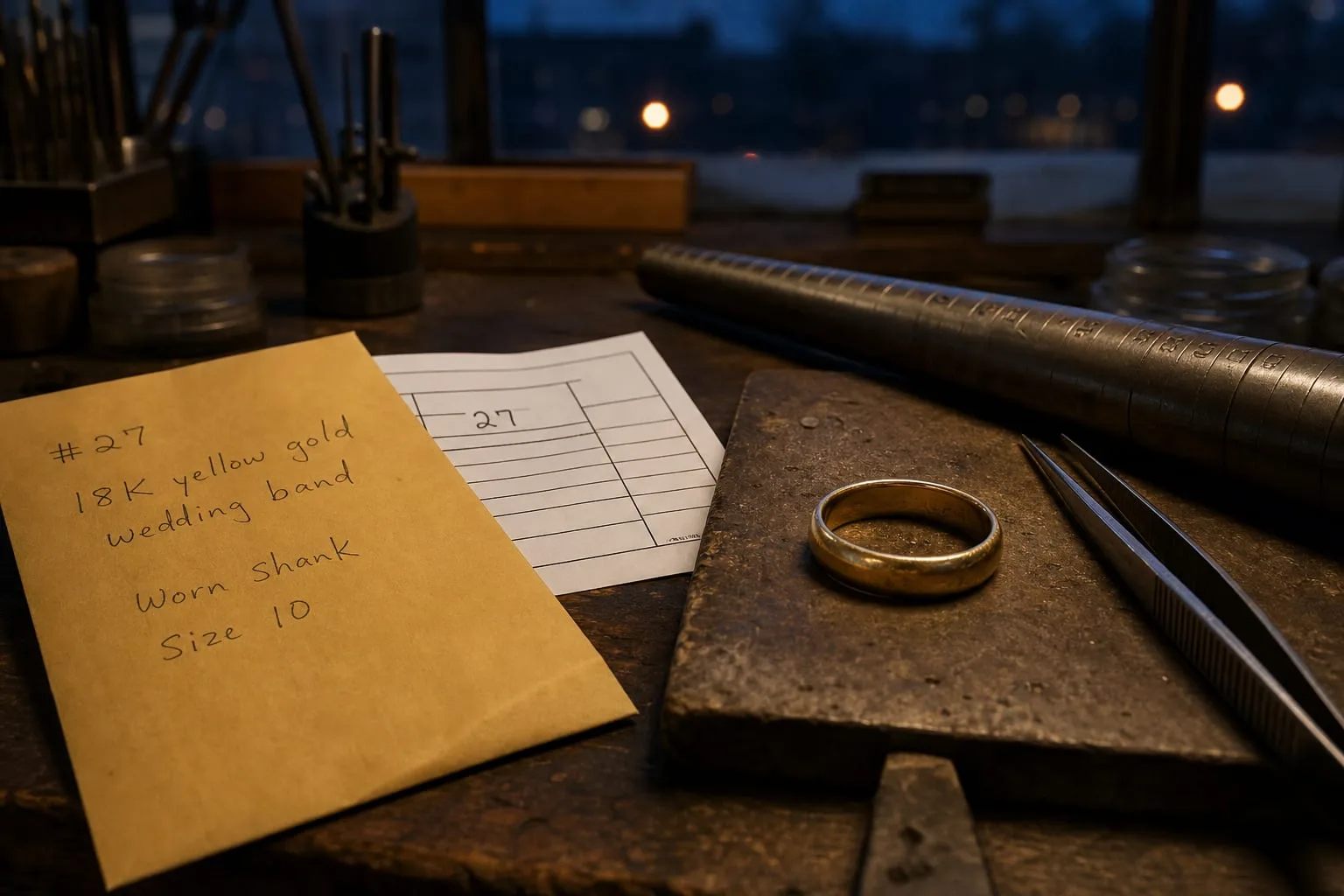
The ring goes into a small manila envelope, someone writes a description on the outside in pencil, you sign a slip, and you leave with a claim ticket. What happens next usually happens somewhere else. A large share of retail jewelers, including well-regarded independents, send repairs out to a trade shop: a bench operation that works for a dozen stores, ships by insured courier, and never speaks to the person who owns the piece. That shop makes the decisions that matter, and the paperwork you signed at the counter is the only instruction it receives.
One. The take-in description, which is your condition report
What the counter staff writes on that envelope is not inventory shorthand. It is the record of what the piece looked like when it left your hands, and it is the document both sides will read if a stone is missing on return. A useful take-in notes metal color and karat, the count and approximate size of every stone, any chipped girdle or abraded facet, existing solder seams, and whether the shank is already thin. Ask to read it back. Ask them to add anything they skipped, then photograph the piece and the slip together before you walk out.
Two. Sizing up, sizing down, and the three ways to do each
"Sizing" covers methods that commit you to very different rings. Stretching, which runs a plain band over a mandrel and thins the metal to gain a fraction of a size, is fast and leaves no seam, and it is not appropriate for anything with stones set around it. Cutting and inserting a piece of matching metal is the standard route up, and it leaves two solder joints that a good bench makes nearly invisible. Sizing down means removing metal and closing the gap. A full shank replacement costs more and is often the honest answer on a band already worn to a blade.
Three. Retipping, rebuilding, and knowing which one you are buying
Prong work is where the vocabulary hides the price. Retipping adds metal to the worn end of an existing prong, which is a repair measured in minutes and appropriate when the prong body is still sound. Rebuilding a head means the setting itself is replaced, the stone reset, and the piece refinished, which is a different order of labor. A bench that quotes retipping on prongs worn halfway down is quoting a repair that will fail again inside a couple of years. Ask which prongs, how many, and whether the head is being replaced or patched.
Four. The trade shop, and the questions the counter can answer for you
Since the party doing the work is usually not the party taking your money, ask about it directly and without apology. Where does the piece go, how does it travel, and is it insured in transit and while on the bench. Does the shop use a laser welder, which puts heat in a controlled point and lets some stones stay in place, or a torch, which generally means stones out and reset. Who authorizes a change of plan if the bench opens the piece and finds a crack. Good stores answer these plainly, because the trade shop is a relationship they have spent years building.
Five. The paperwork that follows the repair, not just the one that precedes it
A replaced shank, a new head, or a substituted stone changes what the piece is, and your insurance schedule still describes the old one. Get a written work order back that says what was done and what materials went in, in karat and weight, and keep it with the appraisal. If the repair is substantial, an updated appraisal is worth the fee, because scheduled jewelry coverage pays against a described item. Quality marks matter here too: the Federal Trade Commission is responsible for the guides governing how precious metal content is represented, and a stamp should match what is actually in the piece.
The decision about what is worth fixing gets easier once you can see the whole chain. A thin shank on a ring you wear daily is worth a full replacement. A chipped melee stone in a cluster of forty may be worth leaving alone until the next service. What you are really buying at the counter is access to a bench you will never visit, and the envelope, the receipt, and the returned work order are the three places that relationship is written down.