Booked a Chimney Sweep for October? What the Word "Swept" on the Invoice Actually Commits Them To
The fall chimney appointment is sold as one line item, but the trade's own vocabulary separates a thorough job from a quick pass, and local rules change what counts.
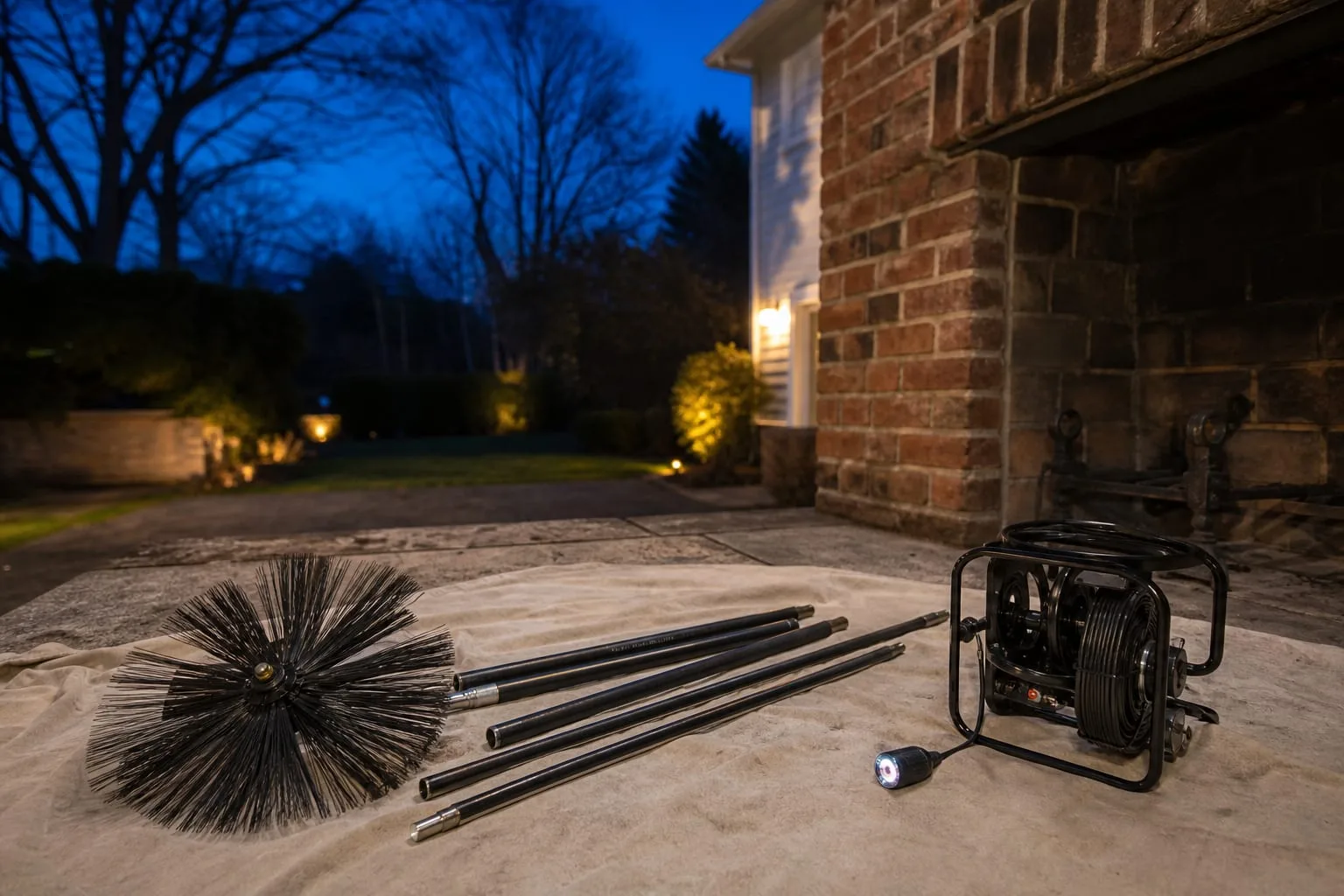
A chimney sweep's invoice often runs to a single line: cleaned and inspected, one flue, and a price. That line can describe two very different afternoons. One of them ends with the flue brushed to bare masonry, the smoke shelf emptied, the damper worked, the cap checked and a written report naming what was found and where. The other ends with a brush run down from the top, a vacuum at the hearth, and a verbal all clear. Both are billed the same way in most of the country, and only one of them tells you anything about the winter ahead.
The three stages of creosote, and which one is no longer a cleaning problem
Sweeps sort deposits into stages, and the stage decides the tool. Stage one is a light, flaky soot that a wire or poly brush lifts off in a single pass. Stage two is harder and more granular, often shiny in patches, and typically calls for a rotary system with chains or whips rather than a hand brush. Stage three is glaze: creosote that has run, cooled and hardened into a tar-like coating bonded to the tile. Glaze is not swept off. It is broken down with an applied chemical modifier over days or weeks, then removed mechanically, or the liner is relined.
This matters because the stage is the whole difference between a maintenance visit and a project. A crew that finds stage three and still writes cleaned and inspected has told you almost nothing, and the deposit that made your flue hazardous is still in there. Ask which stage was found, ask what tool was used, and ask what the flue looked like afterward. A good sweep answers all three without hesitation, because those answers are what the visit was for.
Level one, level two, level three: the inspection ladder in plain terms
The trade borrows its inspection scope language from the national standard for chimneys, and the numbers are not marketing tiers. A level one is a visual check of readily accessible parts, appropriate when nothing about the system or its use has changed. A level two adds video scanning of the flue's full interior and access to attics, crawl spaces and basements, and it is the scope called for when a house changes hands, when an appliance is replaced, or after any event that could have damaged the liner, including a chimney fire, an earthquake or a lightning strike. A level three opens up concealed construction, removing masonry or drywall, and is only performed when a level two found something that has to be seen directly.
The practical translation is that a fall appointment for a chimney you have burned in unchanged for years is a level one job, and paying for one is reasonable. But if you bought the house in the spring, swapped a fireplace insert, or heard a roar and smelled something acrid in the flue last February, a level one is the wrong purchase. Getting a camera up the liner is what separates a report you can rely on from a guess made from the hearth.
What a good job looks like beyond the flue itself
The flue is the headline, and the failures that cost the most money usually sit around it. The crown, which is the slab of mortar or concrete on top of the masonry, cracks with freeze and thaw and lets water into the chimney's core. The cap keeps rain, snow and animals out of the flue and usually carries a spark screen. Flashing at the roof line is the joint most likely to leak, and it is worth asking whether it was looked at. Inside, the smoke chamber's parging, the damper's travel and the firebox mortar joints all tell a story a brush pass never touches.
Water is the compounding agent in nearly all of it. A hairline crown crack in October is a caulk-grade repair. Four winters of water freezing inside that crack widens it, spalls the brick face, rusts the damper assembly and eventually breaks the tile liner's joints, at which point the fix is a rebuild of the top several courses or a full stainless liner. Nothing dramatic happens in any single season. That is precisely why the neglect is cheap to commit and expensive to discover.
Where local rules change what counts as adequate
The physics are the same everywhere and the paperwork is not. Air quality districts across the West and parts of the Northeast run curtailment programs, sometimes called burn bans or no-burn days, that prohibit wood burning when particulate levels are forecast to be high, and some of them exempt only sole-source heat households or appliances certified under the federal emissions program that the Environmental Protection Agency oversees for residential wood heaters. Several counties also require an older stove to be replaced or removed at the point of sale. In dense Northeastern cities, oil and gas flues fall under separate service intervals from wood, and a sweep who works mostly on wood may not be the right call.
Rental property adds another layer. Some municipalities inspect rental units on a cycle and will ask a landlord for a dated chimney service record, and in condominiums and townhouse associations the flue is frequently common element property while the firebox is yours, which decides who pays and who hires. Coastal households deal with salt-driven corrosion on caps and stainless components faster than inland ones. In the Mountain West, sustained cold and high draft can build stage two deposits in a single heavy season. Ask a local sweep which of these applies to your address, and get the answer in the report.
What one skipped season actually buys you
The arithmetic of chimney neglect is unusually clean. A routine sweep and level one inspection is a modest annual expense, the kind of number that sits alongside a furnace tune-up. Skipping a year on light use may cost nothing. Skipping several years while burning unseasoned wood, or burning in a stove drafting through an oversized masonry flue, converts a brushing job into a chemical treatment, and eventually into a relining job whose price sits in the same range as a significant appliance replacement. A flue fire compresses that timeline to one evening and brings an insurance adjuster into the conversation.
The useful habit is to buy the report, not just the cleaning. Ask for stage, tool, scope level, and photographs of the crown, cap and flue interior, and keep them in a file with the date. Two or three years of those documents turn a vague worry into a trend you can read, and they let the next sweep start where the last one finished rather than from nothing.