Booked a Chimney Sweep and Got Quoted an Inspection? What Each Level Commits You To
A sweep cleans, an inspection decides. Here is where the three inspection levels came from, and what each line on a chimney estimate actually obliges you to do.
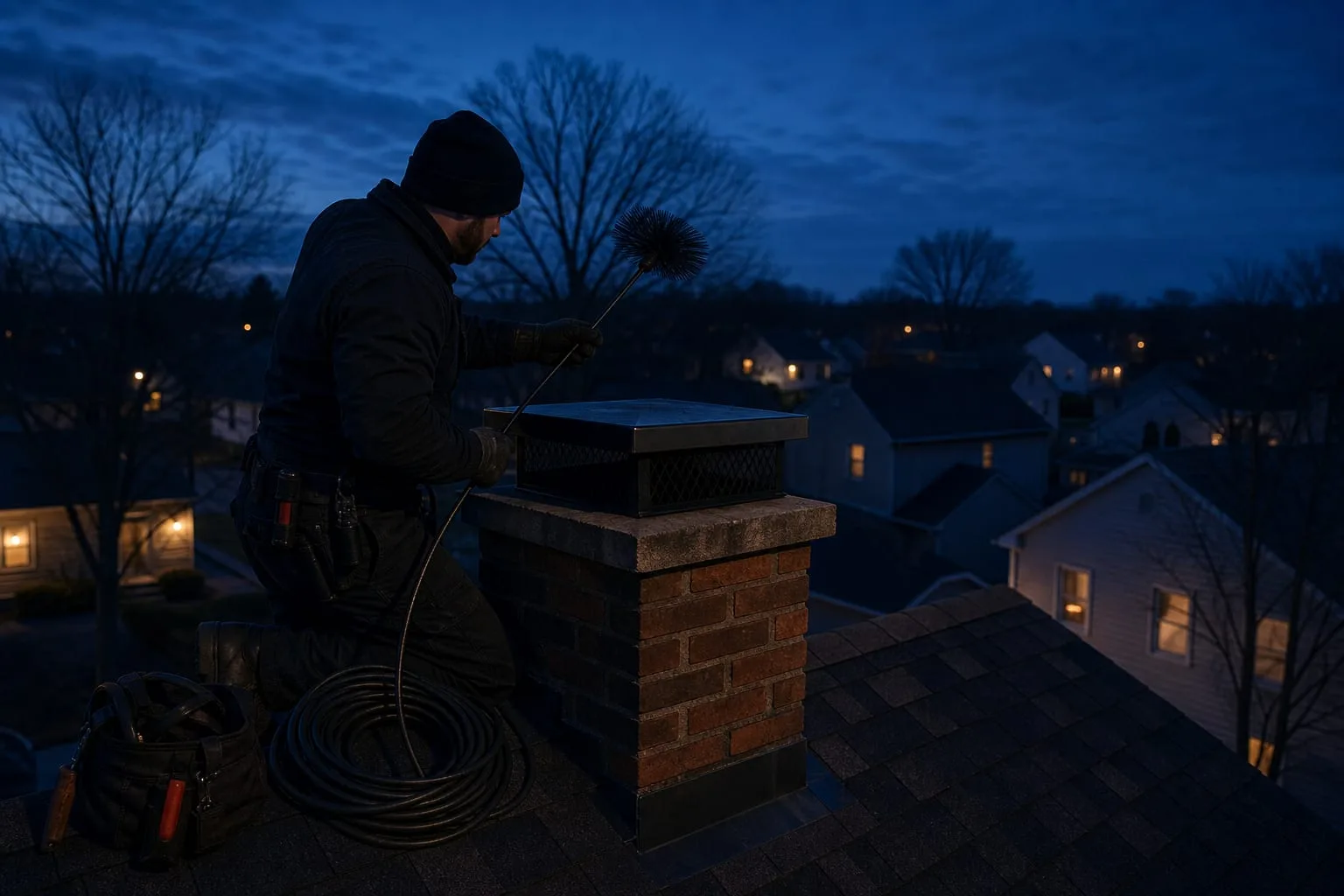
You call about a dirty fireplace, and the person on the phone asks a question you were not expecting: do you want a sweep, or do you want an inspection. The two words get used as though they were interchangeable, and on a quiet residential street in October they very nearly are, since most companies do both in the same visit. They are not the same purchase. One removes deposits from a flue, the other produces an opinion about whether the flue is fit to carry fire, and only the second one carries weight when a buyer's attorney, an insurance adjuster, or a claims file starts asking questions.
How a broom-and-ladder trade acquired a three-tier standard
For most of American history, chimney work was a local, unwritten craft, handed down by watching, priced by the job, and judged by whether the room stopped smoking. That arrangement held because most houses burned coal or oil, and the flues that mattered were tended by the fuel dealer. Then the energy shocks of the 1970s put wood stoves into millions of houses that had never held one, frequently vented into masonry chimneys built for an open fireplace or into no proper liner at all. Chimney fires followed, insurers noticed, and the trade found itself needing language precise enough to survive a dispute.
What emerged was codified rather than invented. The National Fire Protection Association's standard for chimneys, fireplaces, vents and solid fuel-burning appliances, NFPA 211, sorted inspections into three levels, so that a sweep, a code official, and an adjuster could all mean the same thing by the same word. The Chimney Safety Institute of America, established in 1983, built a certification exam around that vocabulary and the practices behind it. The Environmental Protection Agency is responsible for the emissions standards that new wood-burning appliances have to meet, which is why the appliance side of the conversation has its own paperwork. The result is that a trade once priced by feel now sells three distinguishable products.
What a sweep is, and what it deliberately is not
A sweep is mechanical removal. The technician runs brushes on rods, or a rotary head on a flexible shaft, up or down the flue, knocks loose soot and second-stage creosote off the walls, clears the smoke shelf and the firebox, and vacuums what falls with a filtered unit sized for the dust. Ask whether the price includes containment, meaning a sealed panel across the fireplace opening and a HEPA-rated vacuum drawing negative pressure, because that single detail is the difference between a clean living room and a week of gray film on your bookshelves. A sweep-only visit commits you to nothing further. It also proves nothing about the structure behind the soot.
That distinction is why the estimate matters more than the phone call. If the paperwork says cleaning and the technician mentions in passing that the liner looks tired, you have an observation, not a finding. Findings live in an inspection report, with the level stated, the areas accessed listed, and any deficiency described against a specific requirement. Companies that do this well hand you photographs and a written scope on the same day. Companies that do it casually hand you a receipt for a sweep and a verbal warning, and a verbal warning is worth very little six months later when a buyer's inspector opens the same damper.
The three levels, in plain terms
A Level 1 inspection is the routine annual look, appropriate when the appliance and the way you use it have not changed. The technician examines the readily accessible portions inside and out, verifies the flue is free of obstruction and heavy deposit, and confirms basic soundness. No dismantling, no cameras required. A Level 2 is the one triggered by an event: a sale or transfer of the property, a change of fuel or appliance, a relining, an earthquake or a chimney fire, or a claim. It adds accessible attics, crawl spaces and basements, and it adds a video scan of the flue interior along its full length.
A Level 3 is the destructive one, and nobody sells it lightly. It is ordered when a Level 2 has found, or strongly suspects, a hazard that cannot be confirmed without removing something: a section of chase wall, a crown, part of the smoke chamber. Agreeing to a Level 3 commits you to repair work by definition, since the removal itself has to be put back. That is precisely why the levels are worth knowing before the visit. When a company quotes Level 2 for a house you are about to close on, it is not upselling, it is matching the standard to the trigger.
The estimate lines that quietly commit you
Creosote is described in stages, and the stage decides the price. Stage one is dusty and brushes off. Stage two is hard and flaky and takes rotary tooling. Stage three, usually written as glazed or glazed creosote, is a tar-like coating that brushing will not touch, and the remedy is a chemical modifier applied over one or more visits, then re-swept, or in stubborn cases a rotary system rated for glaze. When an estimate offers treatment, ask how many return trips are included and what happens if the glaze survives them, because the honest answer is sometimes relining.
Relining means installing a new stainless liner, insulated or not, sized to the appliance, and it is the largest number on most chimney estimates. Resurfacing, by contrast, means rebuilding the existing clay flue's interior with a cast-in-place or sprayed material. Parging the smoke chamber smooths the transition above the damper so the flue drafts properly. A crown is the mortar cap on top of the masonry; a chase cover is the metal lid on a framed chimney, and a rusted one explains most water stains on a ceiling below. One further phrase to listen for: a technician who says they cannot certify the appliance is telling you the report will name a deficiency, which is exactly what you paid them to determine.
Book the sweep in late summer or early fall if you can, ask for the level in writing, and keep the report with the closing documents rather than the receipts. The next person to look up your flue, whether that is a buyer's inspector or an adjuster, will start from what the last report said.