Called Your Insurer to Ask a Question? That Call Can Be Recorded as a Claim
One household's supply-line drip produced a claim file with nothing paid on it, and three renewals later the consequences were still measurable.
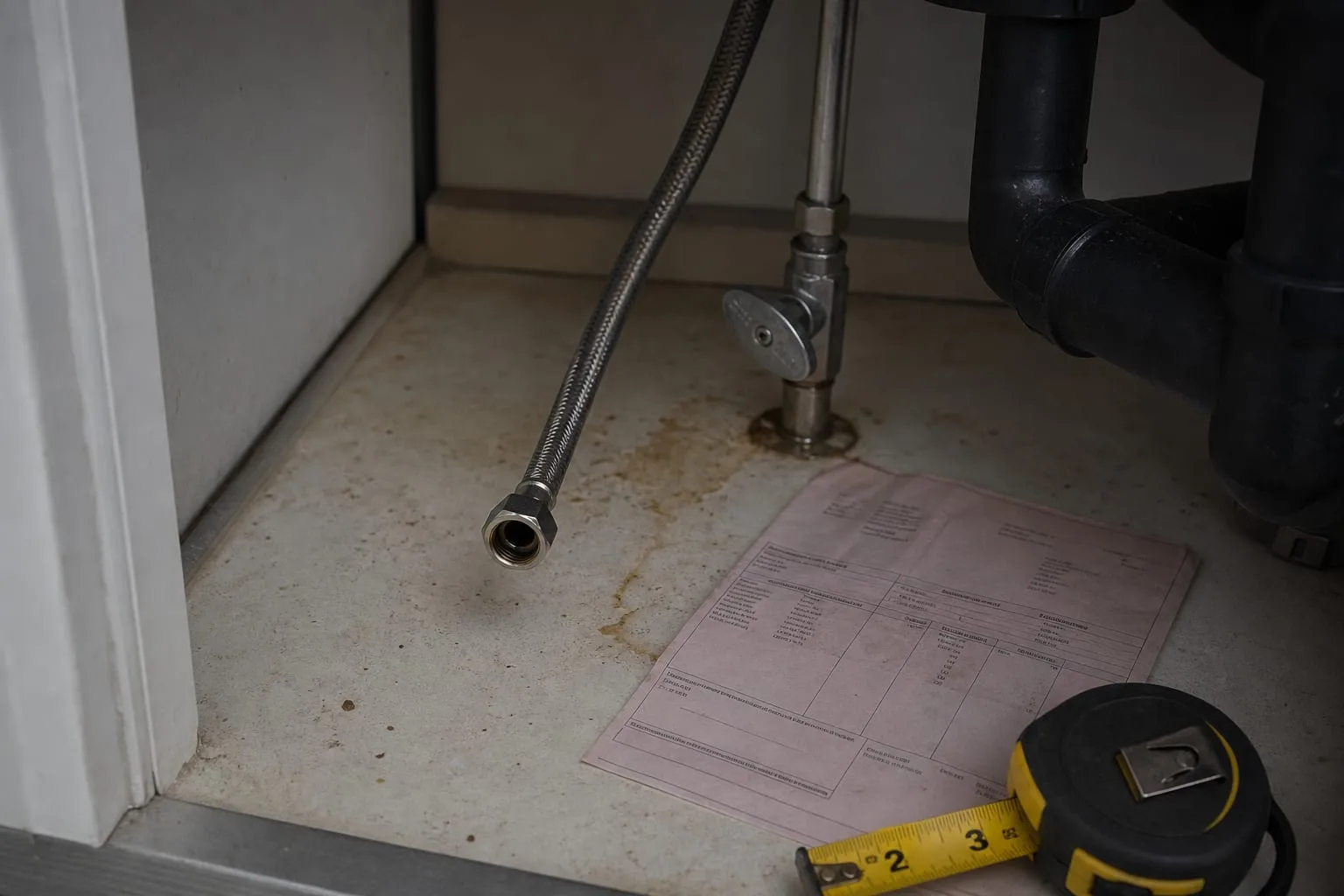
The file I want to walk through is small, which is the point. A household in a 1962 ranch found a stain under the kitchen sink on a Saturday, traced it to a braided supply line weeping at the ferrule, and shut the angle stop. The cabinet floor was ruined, a strip of vinyl had lifted, and the plumber who came Monday replaced both lines. Their repair costs landed in the low four figures against a $1,000 deductible. Before the plumber arrived, one of them called the insurer to ask whether any of it would be covered. That call is where the story actually begins.
Nothing was ever paid. The adjuster took the details, explained that the gap between the invoice and the deductible was not worth pursuing, and closed it out. From a glance, that is a non-event: no check, no inspection, no repair authorized by anyone but the homeowners. Measured against what the industry keeps, it was a loss record with a date, a cause code, a property address, and an amount paid of zero. Three years later, that record was still doing work, and the household had no memory of having created it.
What the file recorded, and what it did not
Loss history moves between carriers through a specialty consumer reporting agency, and the entries are short. A date of loss. A peril code, in this case water damage from plumbing. An address. A dollar figure paid, which here was nothing. What the record does not carry is context: that the leak was caught in hours, that the shutoff worked, that the lines were replaced in matched pairs rather than patched, that no drywall was opened. The narrow fields are what get read at underwriting, and the fields do not have room for the part of the story the homeowners considered most important.
These reports are consumer reports, which means they sit inside the federal framework the Federal Trade Commission is responsible for administering. A homeowner can request their own loss history file and dispute an entry that is wrong, and requesting it does not create a new inquiry the way a call to a claims line can. Knowing that early matters more than knowing it late. The households who check before they shop a policy find out what a new carrier is going to see, and can correct a mis-coded peril or a duplicated entry while there is still time for the correction to land.
Which dimension actually set the price
I expected the amount to be the driver. It was not. On the renewal that followed, the loss-free credit came off the policy, and the credit was a percentage of the whole premium, not a function of the size of the loss that removed it. A zero-payout water entry and a paid water entry did the same thing to that particular line on the declarations page. The dimension that set the price was the count of water losses in the carrier's lookback window, paired with the peril type, because water is the peril most carriers treat as predictive of the next one. The invoice total, the thing the household had been measuring all weekend, barely entered.
That is the gap worth understanding before you pick up the phone. People size a claim in dollars, because dollars are what the plumber hands you. Carriers size it in occurrences within a period, sorted by cause, and a small water occurrence and a large one occupy the same slot. Once you know which dimension is being measured, the decision about whether to report gets much easier, and it stops depending on how the repair bill happens to compare with the deductible in any single month.
The arithmetic they ran the second time
Two winters later the same house had a second event: an ice dam pushed water past the flashing above a bedroom window. This time the household ran the numbers before calling anyone. They got two contractor estimates, so they knew the repair sat well above the deductible rather than near it. They asked their agent, not the claims line, what the carrier's lookback period was for water losses and whether a wind or weather code would be treated separately from plumbing. They also asked what the loss-free credit was worth annually in dollars, which turned an abstract discount into a figure they could compare against.
Then the comparison was simple: the recoverable amount after the deductible, set against the credit they would lose multiplied by the years it would take to reappear, plus any surcharge the agent could describe. The ice dam claim cleared that threshold comfortably, so they filed it, with photographs, both estimates, and dated notes on when the staining appeared. The claim paid. The premium moved, as they had expected it to, and they had already priced the move before consenting to it. What had changed was not their tolerance for claiming. It was that they were measuring the same dimensions the underwriter measures.
The habit that costs nothing to adopt
Route the question away from the claims line. An independent agent, a broker, or a licensed advisor can answer a coverage question in general terms without opening a file, and a plumber or roofer can tell you the repair scope for the price of an estimate. Reserve the first call to the carrier for the moment you have decided to claim, with a scope and a number in hand. Keep your own record of every loss at the property, even the ones you absorb, because that record is what lets you check the reported history against reality when you shop coverage.
The household still has both entries on file, and one of them earned its place. The other was a question asked in the wrong place on a Saturday morning, and it is now the single cheapest lesson in that file: measure the occurrence count and the peril code first, and the dollars second.