Got a Breach Letter? What the Cleanup Actually Costs You, in Dollars and in Hours
A breach notice rarely costs much in cash. It costs hours, and the number of hours is set by which data element was exposed and what you happen to be buying that month.
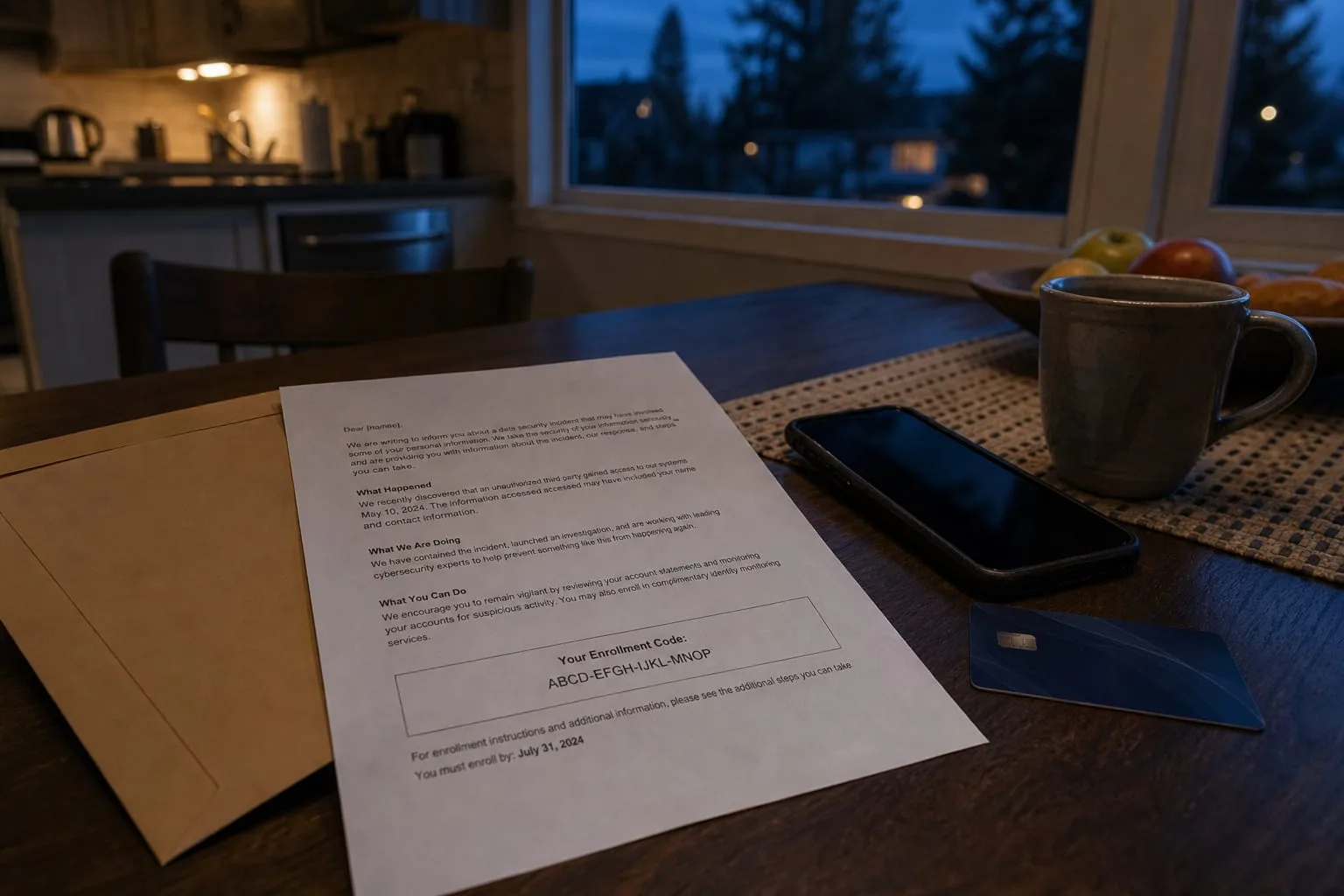
The envelope is thin, the tone is careful, and the offer inside is almost always the same: a year of monitoring, an enrollment code, a phone number staffed by a vendor. People who have worked through a dozen of these stop reading the letter for reassurance and start reading it for two facts, which data elements left the building and on what date, because those two facts set everything that follows. The cash outlay in a typical consumer breach is small, often nothing. The cost is in hours, and the hours are unevenly distributed across the households that get the same letter.
Most of the bill is time, and most of the time lands in the first week
A routine notice involving an email address and a hashed password is a forty minute job: change that password, change it anywhere you reused it, turn on a second factor where the account allows it. A notice involving a Social Security number is a different animal, running several hours spread over a few evenings, because freezing credit at three bureaus, setting up an IRS Identity Protection PIN, and pulling your own reports each take their own account setup and their own retrieval of a PIN you will need again. Nobody bills you for those hours. You still spend them, and spending them late costs more than spending them early.
The genuine cash items are short and worth naming so you can stop worrying about the rest. Expedited replacement of a debit or credit card, where a bank charges for the rush. Certified mail or notarized affidavits if a fraudulent account has already been opened in your name. Occasionally a new driver's license, if the license number was in the breach and your state will reissue with a different one. Credit freezes are not on that list. Federal law made freezes and thaws free at all three nationwide bureaus in 2018, and any site quoting you a fee is not a bureau.
What was exposed is the whole cost driver
Think of the exposed field as a durability question rather than a sensitivity question. A password is cheap to fix because you can replace it in a minute and the replacement is complete. A card number is cheap for the same reason, and the issuer usually absorbs the fraud loss and mails a new one. A Social Security number is expensive because it is functionally permanent, it opens credit lines rather than draining one account, and the damage surfaces months later in a collections letter rather than immediately in a statement. Date of birth, mother's maiden name, and prior addresses are expensive for a related reason: they are the answers to other companies' identity questions.
Two other categories deserve more weight than they usually get. Medical and insurance records carry a claims history that can be used to bill services in your name, and the cleanup runs through providers and insurers rather than through the credit bureaus, which means a slower path with fewer standard forms. Bank routing and account numbers matter because the account is harder to replace than a card, and the fix is a conversation with your bank about a new account number rather than a form you file online. The Federal Trade Commission is the federal agency responsible for identity theft recovery for consumers, and its recovery process is the sequence most banks and creditors expect you to have followed.
Four questions for the number on the letter, and what a weak answer sounds like
Ask exactly which data elements were involved for you, not for the incident overall. Letters are written for the largest affected group, and the call center often has a per-record field. A good answer names fields. A poor answer restates the letter's phrase, "personal information may have been involved," and offers you the enrollment code again, which tells you the representative has no record-level access and you should treat the worst listed element as yours.
Ask when the intrusion began and when it ended, since a breach discovered in March that started the previous August changes which of your old statements deserve a second look. Ask whether the monitoring on offer includes all three bureaus or one, because single-bureau monitoring leaves two-thirds of a new-account attempt invisible. Ask what happens at the end of the covered year and whether the coverage auto-renews into a paid subscription, and read a vague answer there as a yes. Ask, finally, whether the company will confirm the exposure in writing, because a creditor disputing a fraudulent account later will want that letter and the reference number on it.
Timing is the variable people underestimate
The most expensive breach letters are the ones that arrive while you are mid-transaction. A frozen file is free, but a mortgage underwriter, an auto lender, or a landlord's screening service hitting a frozen file mid-process costs you days, and days can cost a rate lock or a closing date. The answer is not to skip the freeze; it is to thaw the specific bureau the lender pulls, for a set window, before they pull. Ask your loan officer which bureau and which day. Someone who has done this repeatedly makes that call before touching the bureau sites, because the sequence, not the freeze, is what protects the calendar.
Keep the letter, the reference number, the date you froze each bureau, and the PINs, in one folder you can find in eighteen months. The second breach notice, and there will be one, then costs a fraction of the first, because the freezes are already in place and the only decision left is which single account needs a new password tonight.