Booked a Trip at One Price and Paid Another? Where the Extra Lines Come From
One five-night family booking, traced from the search result to the final card statement, and what the 2025 fee disclosure rules changed about where those numbers appear.
A family of four books five nights in a coastal resort town and two round-trip flights, and the number they remember is the one from the search results page, because that is the number they compared against three other options before they stopped looking. The number on the card statement six weeks later is meaningfully larger. Nothing was hidden in the criminal sense, and nothing was a surprise once each line was read, but the arithmetic that produced the difference was done in four different places by four different companies. Traced backward, the gap resolves into a handful of units of measure, each multiplied by a count the family already knew.
The booking, reconstructed line by line
Start with lodging, because it is the largest single item and the one that changed most recently. The nightly rate carried a mandatory daily charge attached to amenities the family used twice, and that charge multiplied by five, not by one, which is the detail people miss when they glance at it. Parking was priced per night as well, self-park at one rate and valet at another, and the property had no street alternative within a reasonable walk. Occupancy and local lodging taxes applied to the room rate, and in some jurisdictions to the mandatory charge too. Four separate multipliers, one count of nights.
Air travel worked on different units. Checked bags priced per bag, per direction, which is a multiplier of four for a family carrying two suitcases each way, and the price varied by whether the bag was paid for at booking or at the counter. Seat assignments priced per seat, per segment, so a family that wanted to sit together on a connecting itinerary paid eight times, not twice. The rental car added a daily rate, an airport concession recovery fee expressed as a percentage, a vehicle license recovery fee per day, and an additional driver charge that some companies waive for a spouse and some do not.
What changed, and why it changed
Through the 2010s, the standard practice across lodging and ticketing was to advertise a base rate and disclose mandatory add-ons later in the checkout flow, often on the page where the card number is entered. That practice came under sustained pressure, and in 2025 a federal rule took effect requiring that advertised prices for short-term lodging and live-event tickets show the total amount the customer must pay, excluding only genuine government charges and shipping. The Federal Trade Commission oversees this area of pricing disclosure. The practical effect on a search results page is that the mandatory daily resort charge now has to be inside the number you compare, rather than added after you have stopped comparing.
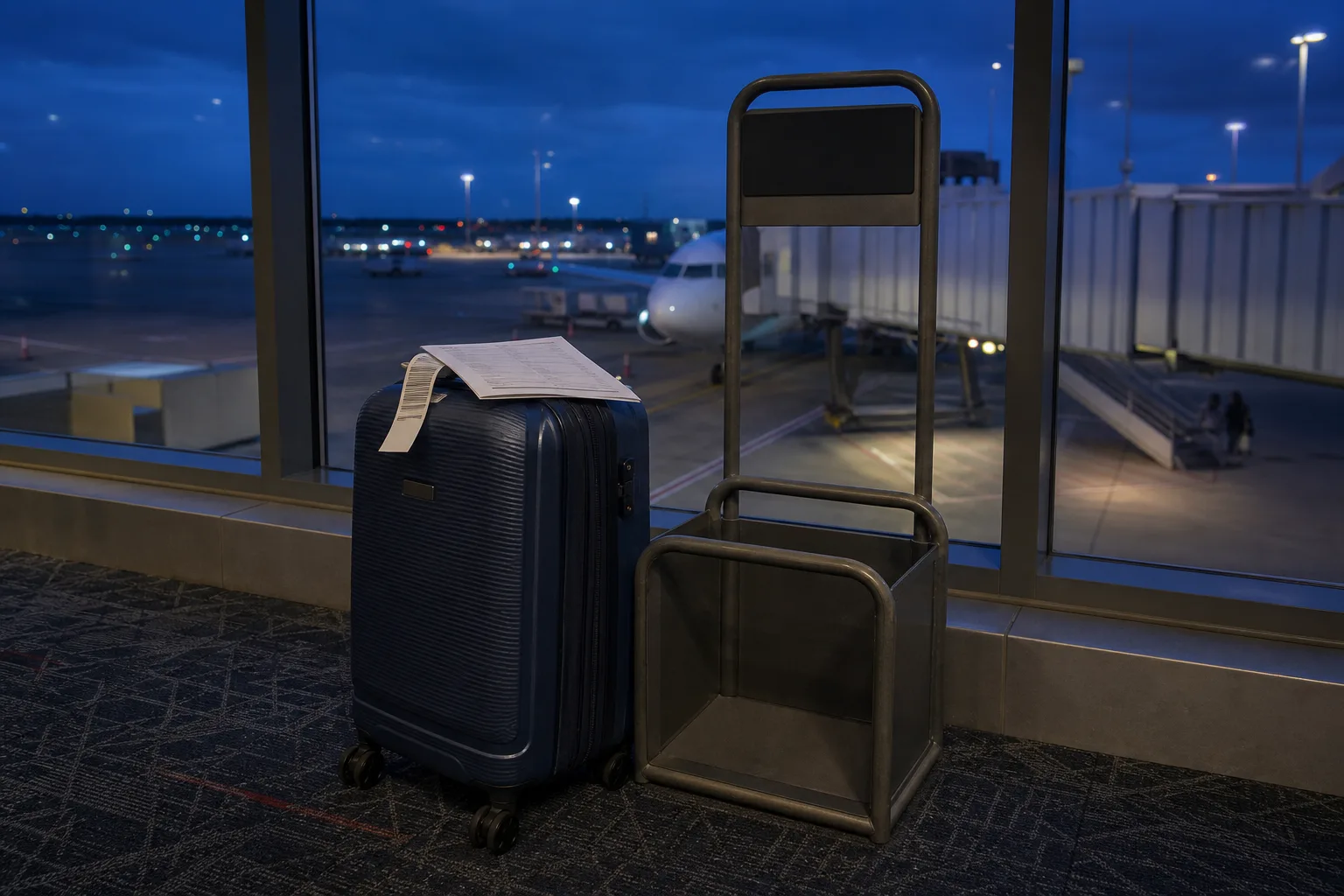
Airlines sit under a different regulator and a different set of requirements, and the direction of travel there has been the opposite: more granular unpacking of what used to be bundled. Checked bag prices rose across most major carriers during 2024, and several introduced a spread between the online price and the airport price, which turns a packing decision into a pricing decision made days in advance. Gate agents also began measuring carry-on bags against the sizer frame more consistently than they had. A bag that fit in 2019 by force of habit is now measured, and a bag two inches over its allowance on a full flight becomes a gate-checked bag at the higher rate.
The dimensions that set the price
Once you know the units, the trip prices itself. Nights drive lodging charges, parking, and any daily vehicle fee. Segments drive seat assignments, which is why a nonstop itinerary priced fifty dollars higher than a connection can still be the cheaper trip for four people who want assigned seats together. Bags drive baggage, and bags are governed by two physical limits: linear inches, meaning length plus width plus height, and weight in pounds, usually with a sharp step at fifty for domestic checked luggage. Drivers under twenty-five carry a daily surcharge at nearly every rental company. People drive per-person resort activities and breakfast plans.
Pricing the trip before you commit
The reliable method takes about twenty minutes and happens before anything is booked. Carry each option all the way to the final confirmation screen, the one that shows the charge total, and write that number down rather than the search result number, because that is now where the mandatory items are consolidated. Weigh the suitcases at home on a bathroom scale with and without a person holding them. Measure the carry-on with a tape, all three dimensions, and add them. Then multiply each unit by its count. The trip that wins this comparison is frequently not the one that won the first glance.
What the recent rules changed is not the total. It is where the total appears, which is early enough now to be part of the decision rather than a discovery made afterward.